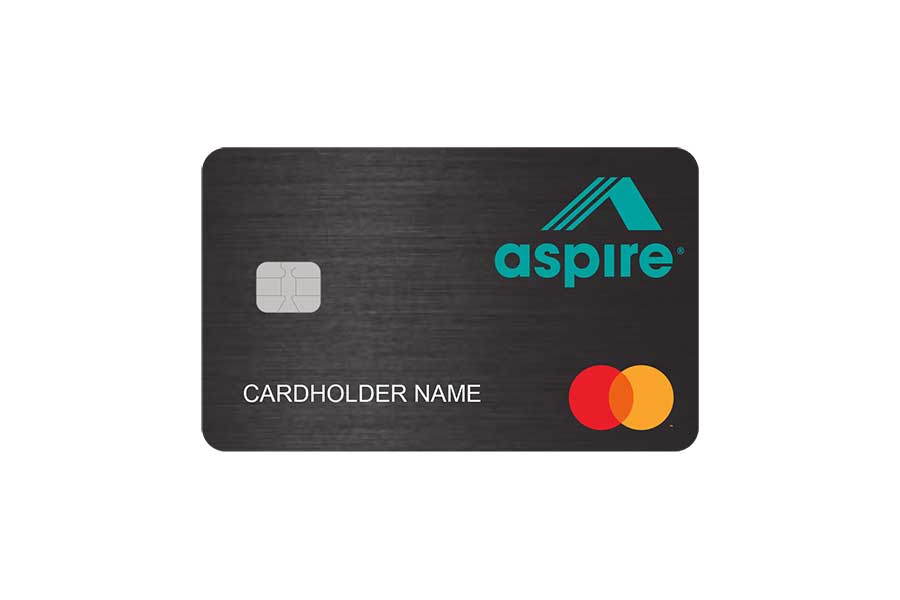
The Aspire Mastercard is an unsecured credit card issued by The Bank of Missouri for applicants with bad credit. It doesn’t require a security deposit, which is its main advantage over secured cards, but it carries significant fees that make timing matter more than most applicants realize.
Aspire offers three versions: the standard Aspire Mastercard, the Aspire Cash Back Rewards Mastercard, and the Aspire Protect Mastercard. All are targeted at subprime borrowers rebuilding credit or applicants with damaged credit who can’t afford a secured card deposit.
Here’s what credit score you need, what the real costs look like, and when the Aspire card is actually the right tool versus when better options exist.
Recommended Credit Score for the Aspire Credit Card
There’s no strict minimum credit score for the Aspire Mastercard. The card is designed for subprime borrowers, and approvals happen across the poor and fair credit ranges, with some reports of approvals at FICO scores as low as 300.
Your credit score determines your terms rather than whether you qualify. Lower scores mean higher annual fees, monthly maintenance fees, and lower starting credit limits. The card isn’t a single product so much as a tiered offer where your specific fees depend on what Aspire’s underwriting model thinks of your profile.
Aspire offers pre-qualification with a soft credit pull, which lets you see your likely approval and terms before committing to a hard inquiry. Running this first is worth doing regardless of where your credit sits.
How Aspire Evaluates Applications
The Bank of Missouri evaluates Aspire applications differently than prime credit card issuers. The factors that carry the most weight are:
- Income relative to existing obligations: Aspire wants to see that you can make minimum payments even with the card’s high fees. Steady income matters more than high income.
- Bank account verification: Aspire may require access to your bank account to verify income through a process called income verification. This is more invasive than most issuers.
- Prior Aspire or Atlanticus history: Aspire is managed by Atlanticus Services Corporation, the same company behind Fortiva. A prior Aspire or Fortiva account that closed negatively can block approval for a new Aspire card.
- Active collections: Unresolved collections don’t automatically disqualify you but push you toward worse terms.
- Address stability: Because subprime cards are a common fraud target, Aspire puts weight on address verification and ID matching.
The Three Aspire Card Options
Aspire offers three distinct Mastercard products, each targeting a slightly different applicant. Here’s what each one offers:
- Aspire Mastercard: The basic version with no rewards. Annual fee typically ranges from $49 to $175 the first year, dropping to $0 to $49 after, with a monthly maintenance fee of $5 to $12.50 added starting year two.
- Aspire Cash Back Rewards Mastercard: Earns 1% cash back on all eligible purchases. Same general fee structure as the basic card.
- Aspire Protect Mastercard: Focuses on protection benefits like fraud liability and transaction alerts rather than rewards. Fee structure is similar.
The purchase APR across all three products ranges from 29.99% to 36% fixed, among the highest rates available on any legal consumer credit product. Starting credit limits typically run $350 to $1,000 depending on your profile.
The Math That Decides if This Card Works
The fee structure is what separates Aspire from being a useful rebuilding tool versus an expensive mistake. Here’s the reality:
If you’re approved for a $500 credit limit with a $175 first-year annual fee, you have $325 of actual usable credit the day your card arrives. That’s before monthly maintenance fees kick in during year two.
Year one cost with typical fees: $85 to $175 in annual fees, no monthly fee. Year two cost: $49 annual fee plus up to $180 in monthly maintenance fees, for up to $229 per year.
At 1% cash back on the Cash Back Rewards version, you’d need to spend $22,900 annually just to offset the year-two fees through rewards alone. That’s not realistic on a $500 to $1,000 credit limit where you’re supposed to stay below 30% of your balance.
The card works only if you treat it as a short-term credit-building tool, not a rewards card. The rewards are incidental, not the reason to hold the card.
Secured Cards Versus Aspire
Before applying for Aspire, consider whether a secured card would cost less. A Capital One Platinum Secured or Discover it Secured with a refundable $200 deposit reports to the same three bureaus and typically costs less over 12 months than Aspire’s fees.
The tradeoff is the upfront deposit. If you have $200 available to put down, a secured card is almost always the better path. If you don’t have the deposit cash and need unsecured credit access to rebuild, Aspire fills that gap at a higher price.
Within the unsecured subprime space, Aspire competes directly with Fortiva (also issued by The Bank of Missouri), Mission Lane, and Credit One. Comparing current fee structures before applying matters because these cards change their terms frequently.
How to Strengthen Your Application Before Applying
These steps address what Aspire actually weighs, and more importantly, help you decide whether to apply:
- Use Aspire’s pre-qualification tool: The soft pull shows your likely terms without affecting your score. Do this before any hard application.
- Check whether you can afford a secured card instead: If you have $200 in available cash, a secured card with a refundable deposit will typically cost less over a year.
- Report all legitimate income: Aspire weighs income heavily in credit limit sizing. Include household income, benefits income, and self-employment earnings if applicable.
- Address any prior Aspire or Fortiva history first: Both cards share the same issuer. A prior closure on either can affect new applications with Aspire.
- Plan to graduate within 12 to 18 months: The fees get more expensive in year two when monthly maintenance charges start. If your credit improves enough to qualify for a better card, move on before those fees hit.
Ready to take action on your credit?
Get your personalized plan in 30 seconds. Free, no credit check.

Bottom Line
The Aspire Mastercard fills a narrow gap in the credit market. It provides unsecured credit access to people with damaged credit who can’t come up with a secured card deposit, and it reports to all three bureaus.
For that specific situation, it works as a short-term credit-building tool. The fees make it expensive to hold long-term, and the 1% cash back rate on the Rewards version doesn’t come close to offsetting the costs.
Use Aspire’s pre-qualification tool to see your actual terms before applying, and consider whether a secured card with a refundable deposit would cost less. Plan to graduate to a better card within 12 to 18 months once your credit supports it. Those three steps keep Aspire useful without letting it become a long-term drag on your finances.