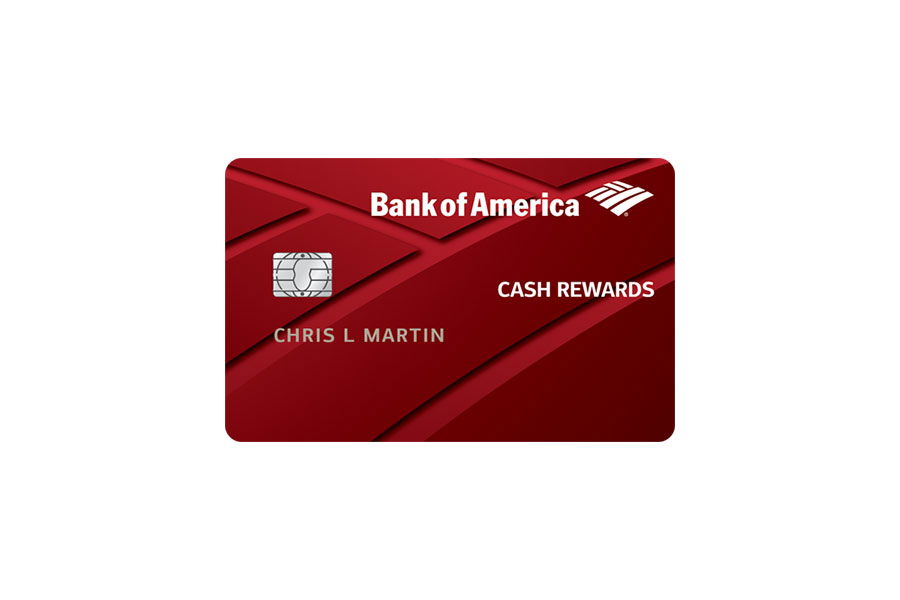
The Bank of America Travel Rewards credit card punches above its weight for a no-annual-fee card. You get unlimited points on every purchase, a solid welcome bonus, no foreign transaction fees, and one of the rare 0% intro APR offers you will find on a travel card. But this card targets a specific type of borrower, and your credit score is the first thing Bank of America looks at.

This guide breaks down the credit score you will likely need, what else Bank of America reviews, and how to put your best application forward.
Credit Score Requirement for the Bank of America Travel Rewards Card
Most sources place the recommended credit score for the Bank of America Travel Rewards card at 750 or higher. That puts it firmly in the excellent credit range. Bank of America does not publish a hard cutoff, but applicants below that threshold tend to face longer odds unless the rest of their financial profile is particularly strong.
If your credit score is in the high 600s or low 700s, approval is possible but less likely. The card is aimed at borrowers who have already demonstrated consistent, responsible credit use over time.
What the Bank of America Travel Rewards Card Offers
This card keeps the rewards structure simple, which is part of its appeal. Here is what you get:
- Welcome bonus: Earn 25,000 points after spending $1,000 in the first 90 days of account opening, redeemable for a $250 statement credit toward travel purchases.
- Base rewards: Earn 1.5 points per $1 spent on all purchases with no categories to track and no caps.
- Travel center bonus: Earn 3 points per $1 spent on travel booked through the Bank of America Travel Center.
- Intro APR: 0% on purchases and balance transfers for 15 billing cycles. After that, a variable APR of 17.49% to 27.49% applies.
- No annual fee: $0.
- No foreign transaction fees: Spend abroad without the typical 3% surcharge.
- Preferred Rewards boost: Bank of America Preferred Rewards members can earn 25% to 75% more points on every purchase, pushing the base rate as high as 2.62 points per $1 spent. Qualifying requires a combined balance of at least $20,000 across eligible Bank of America and Merrill accounts.
Points are worth 1 cent each when redeemed for travel or dining purchases, including flights, hotel stays, car rentals, cruises, and even campgrounds and amusement parks. There are no blackout dates and no airline or hotel restrictions.
Pros & Cons of the Bank of America Travel Rewards Card
This card has a clear value proposition, but it is not the right fit for everyone. Here is the honest breakdown:
Pros
- No annual fee: You keep all of your rewards without paying to hold the card.
- Simple rewards structure: One flat rate on everything means no category tracking or activation required.
- Flexible redemption: Points apply to a wide range of travel and dining purchases with no restrictions.
- Intro APR offer: 15 billing cycles at 0% on purchases and balance transfers is rare for a travel card.
- No foreign transaction fees: A meaningful perk for international travelers.
- Preferred Rewards upside: Existing Bank of America customers with significant balances can substantially increase their earning rate.
Cons
- High credit score requirement: A 750+ credit score puts this out of reach for many applicants.
- No premium travel perks: No lounge access, no travel insurance, and no trip cancellation coverage.
- Modest base earning rate: 1.5 points per $1 is competitive for a no-fee card but falls behind premium travel cards.
- Travel center restriction for bonus points: The 3x rate only applies to bookings made through Bank of America’s own portal.
- Preferred Rewards threshold is steep: The $20,000 minimum balance requirement makes the boosted earning rate inaccessible for many cardholders.
What Else Bank of America Looks At
Your credit score is the starting point, but Bank of America evaluates your full financial picture before making a decision. These factors all play a role:
- Income and employment: A steady income tells Bank of America you can handle monthly payments. Higher income can strengthen an application that is otherwise on the edge.
- Debt-to-income ratio: The lower your existing debt load relative to your income, the better you look as a borrower. High balances across other accounts can work against you even if your score is solid.
- Length of credit history: A longer track record gives Bank of America more data to work with. Short credit histories create uncertainty, even when credit scores are high.
- Payment history: Recent late payments are a significant red flag. A clean record of on-time payments across all accounts is one of the strongest signals you can send.
- Recent hard inquiries: Multiple credit applications in a short window suggest financial stress and can chip away at your score before Bank of America even sees it.
How to Strengthen Your Application Before You Apply
If your credit score is below 750 or you just want to give yourself the best possible shot, a few targeted steps can make a real difference. Here is where to focus:
- Pull your credit reports and look for errors: Check your reports from Equifax, Experian, and TransUnion at AnnualCreditReport.com. Inaccurate late payments, duplicate accounts, or accounts that are not yours can drag your score down without any fault of your own. Dispute anything that looks wrong.
- Pay down existing balances: Reducing your credit utilization below 30% of your available credit can lift your score meaningfully in a short period. The lower, the better.
- Hold off on other credit applications: Each hard inquiry takes a few points off your score. Avoid applying for any other cards or loans in the weeks before submitting your Bank of America application.
- Give recent late payments time to age: If you have had a slip in the past year, focus on a consistent stretch of on-time payments before applying. A few months of clean history can help soften the impact.
Ready to take action on your credit?
Get your personalized plan in 30 seconds. Free, no credit check.

Alternatives to the Bank of America Travel Rewards Card
If your credit score is not quite there yet, or if you want to compare options before committing, these cards cover similar ground:
- Chase Sapphire Preferred: Earns 3x points on dining and 2x on travel with a $95 annual fee. Better for travelers who want premium category bonuses and transfer partners. Requires good to excellent credit.
- Capital One Venture Rewards Card: Earns 2x miles on every purchase with a $95 annual fee and solid travel protections. More accessible approval odds than the Bank of America card for scores in the 700 range.
- Citi Strata Premier Card: Earns 3x points on hotels, air travel, restaurants, groceries, and gas with a $95 annual fee. A strong all-around option for travelers who spend across multiple categories.
Is the Bank of America Travel Rewards Card Worth It?
For the right person, this card is genuinely hard to beat at the no-annual-fee tier. The welcome bonus is attainable, the flat 1.5x earning rate works well for people who do not want to manage categories, and the intro APR offer is a rare bonus for a travel card. If you are already a Bank of America or Merrill customer with significant balances, the Preferred Rewards boost takes the value up another level.
The catch is that you need a strong credit profile to get approved. If your score is below 750, your energy is better spent building credit for a few months before applying. The card will still be there when you are ready, and you will be in a stronger position to get approved and make the most of what it offers.