USAA operates differently from most major card issuers. Membership is required before you can apply for any USAA product, and membership is restricted to active military, veterans, and their eligible family members.
If you qualify for membership, USAA’s card lineup is worth serious consideration. The rates, benefits, and member-focused structure consistently outperform what most civilian issuers offer at comparable price points.
The card lineup covers six products across four categories, from a low-rate balance transfer card to a travel rewards card to secured cards for credit building. Here’s what credit score each tier requires, what USAA evaluates beyond that number, and how the membership requirement shapes the application process.
The USAA Credit Card Lineup
USAA currently offers six credit cards, each built around a different financial priority.
The USAA Rate Advantage Visa Platinum is the low-rate card, with a variable APR ranging from 10.40% to 24.40% and a 0% intro APR for 15 months on balance transfers. For members who occasionally carry a balance, the lower rate floor makes a meaningful difference in interest costs compared to most rewards cards.
The Cashback Rewards Plus American Express earns 5% back on gas station purchases up to $3,000 annually, 5% back on military base purchases up to $5,000 annually, 3% back on grocery purchases up to $3,000 annually, and 1% on everything else. No annual fee. The military base category is unique to USAA and delivers genuine value for active duty members who make regular purchases on base.
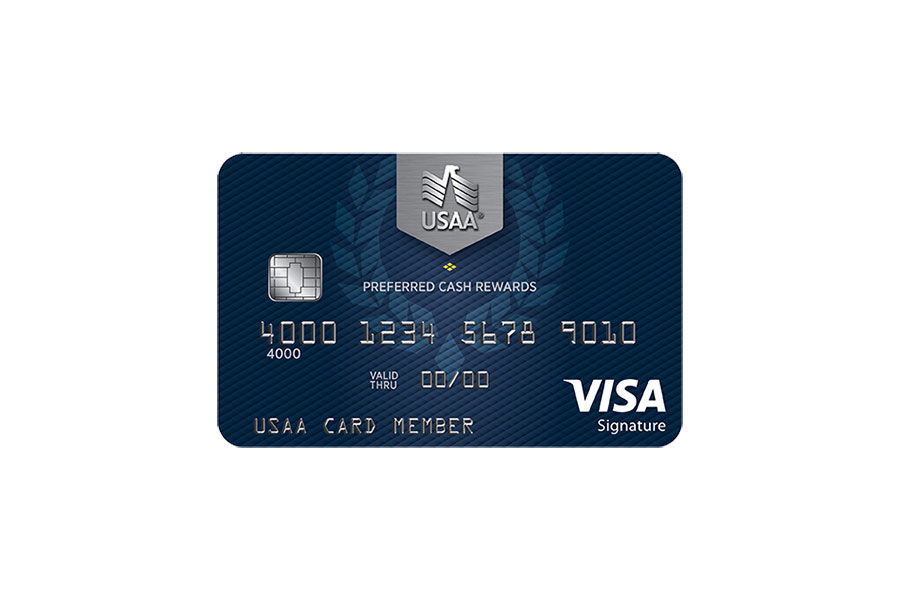
The Preferred Cash Rewards Visa Signature earns unlimited 1.5% back on all purchases with no category restrictions, plus a $250 welcome bonus after spending $1,000 in the first 90 days. No annual fee. For members who want simplicity over optimization, this is the strongest flat-rate no-fee option in the lineup.
The USAA Eagle Navigator Visa Signature earns 3x points on travel and transit and 2x on all other purchases. It carries a $95 annual fee and comes with up to $120 in TSA PreCheck or Global Entry credit every four years. It also provides 10,000 bonus points each year after booking a hotel or car through the USAA Rewards Center. For members who travel regularly, the 3x travel earning rate and Global Entry credit make the annual fee straightforward to justify.
The USAA Rewards Visa Signature earns 2x points on dining and gas stations and 1x on everything else. No annual fee. It sits between the flat-rate cash back cards and the Eagle card for members who want category bonuses without a fee commitment.
The USAA Secured Visa and Secured American Express are the credit-building cards, each backed by an interest-earning security deposit ranging from $250 to $5,000. Both report to all three major credit bureaus and offer a path to upgrade to an unsecured USAA card with responsible use.
Credit Score Requirements for a USAA Credit Card
USAA doesn’t publish specific credit score requirements, but applicant data points to consistent benchmarks across their lineup.
The secured cards are available to applicants with no credit history or damaged credit. The Rate Advantage, Rewards Visa, and Cashback Rewards Plus cards generally require a credit score of 670 or higher. The Preferred Cash Rewards Visa Signature and Eagle Guide, as Visa Signature products with more substantial benefits, typically see approvals clustering closer to 700 and above.
USAA’s APR range on most cards spans from the mid-teens to the high twenties, and where you land within that range depends heavily on your credit score. A stronger credit score doesn’t just improve approval odds, it also determines whether you’re offered the lower end of that APR range, which matters significantly for members who occasionally carry a balance.
The Membership Requirement and What It Means for Applicants
Before any credit score discussion is relevant, you need to confirm membership eligibility. USAA membership is open to active duty military, National Guard and Reserve members, veterans, and eligible family members including spouses, children, and widows or widowers of USAA members.
If you’re not currently a member, you can apply for membership through USAA’s website before submitting a credit card application. The membership application is separate from the credit card application and doesn’t involve a credit check. Establishing membership first and allowing a brief period for your account to be active before applying for a card can sometimes smooth the credit card approval process.
What Else Does USAA Look At?
USAA Federal Savings Bank reviews your full financial profile alongside your credit score. These factors carry the most weight:
- Income relative to existing debt: USAA wants to see that your monthly obligations leave meaningful room for a new credit line. A lower debt-to-income ratio makes the application more straightforward regardless of which card you’re targeting.
- Recent payment history: A late payment in the past twelve months raises concerns at any tier. USAA’s member base skews toward financially stable applicants, and the underwriting standards reflect that expectation.
- Existing USAA relationship: Members who already hold USAA bank accounts, insurance policies, or other products in good standing have an established relationship that supports a credit card application.
- Credit utilization: High balances relative to your available credit limits suggest financial strain. Keeping total usage below 30% strengthens any USAA application.
- Active derogatory marks: Open collections or recent charge-offs raise concerns that a qualifying credit score alone won’t resolve. Addressing those before applying removes a significant obstacle.
How to Strengthen Your Application Before Applying
These steps address the factors USAA weighs most heavily in the months before you apply:
- Confirm membership eligibility first: If you’re not yet a member, establish membership before applying for a card. It’s a separate process that doesn’t affect your credit score.
- Match your target card to your credit score: The secured cards are the right starting point if your credit score is below 670. The Rate Advantage and Rewards cards are more accessible than the Preferred Cash Rewards and Eagle Guide for applicants in the 670 to 699 range.
- Pay down revolving balances: Getting total utilization below 30% across all accounts strengthens both your credit score and the overall profile USAA reviews.
- Build a clean recent payment record: Six to twelve months of on-time payments across all accounts sends a strong signal to USAA’s underwriters regardless of what your credit report shows before that window.
- Dispute errors on all three credit reports: Pull your credit reports from Equifax, Experian, and TransUnion separately and flag inaccurate items with each bureau directly.
Ready to take action on your credit?
Get your personalized plan in 30 seconds. Free, no credit check.

Bottom Line
USAA’s credit card lineup delivers competitive rates, strong cash back structures, and military-specific benefits that civilian issuers simply don’t offer. The Rate Advantage card’s low APR floor, the Cashback Rewards Plus’s military base earning category, and the Eagle card’s travel earning rate all represent genuine value for eligible members.
Confirm membership eligibility first, match your target card to your current credit score, and go in with a clean recent payment record. For members who qualify, USAA’s cards are consistently among the strongest options available at every credit tier they serve.