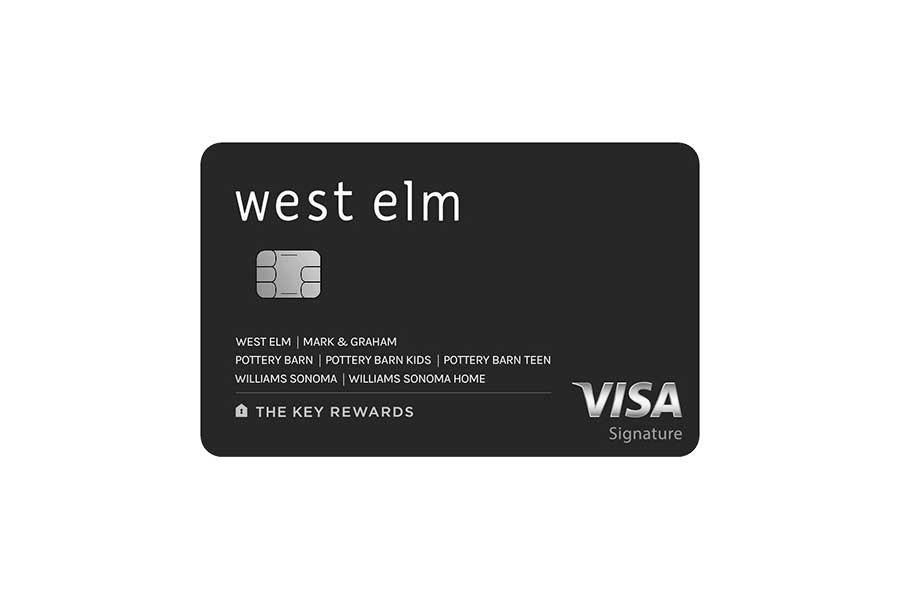
The West Elm Key Rewards Visa is issued by Capital One and does considerably more than reward West Elm purchases. The card earns across all eight Williams Sonoma brands, including Pottery Barn, Pottery Barn Kids, Pottery Barn Teen, Williams Sonoma, Williams Sonoma Home, Mark and Graham, and Rejuvenation, plus meaningful rates on grocery and dining spending.
For households that shop regularly across that brand family, the earning structure functions more like a general rewards card than a typical store card.
Capital One’s involvement as the issuer is the detail that shapes this application most significantly. Here’s what credit score you’ll need, how the card’s benefits break down, and what Capital One evaluates before approving you.
Credit Score Requirements for the West Elm Key Rewards Card
Most approved applicants carry a credit score of 700 or higher. Multiple sources and applicant data place this card in the good-to-excellent credit tier, which is consistent with Capital One’s positioning of it as a Visa card rather than a closed-loop store card.
That’s a notably higher bar than the original article’s 600 figure, and it reflects both the card’s open-loop Visa network acceptance and Capital One’s underwriting standards. The card’s 4% grocery and dining earning rate adds competitive general-purpose utility that justifies the higher approval threshold.
Capital One’s pre-approval tool uses a soft pull with no impact on your credit score, making it worth checking before you commit to a hard inquiry.
What the West Elm Key Rewards Visa Actually Delivers
The card earns 10% back in rewards for the first 30 days at Williams Sonoma brands, then drops to 5% thereafter. That introductory rate is genuinely useful for anyone planning a significant home furnishing purchase around the time of application. After the first 30 days, the ongoing earning structure kicks in:
5% back at Williams Sonoma, West Elm, Pottery Barn, and the other six brands in the portfolio. 4% back at grocery stores, dining, fast food, and food delivery. 1% on everything else.
Cardholders also get a birthday reward each year, free standard shipping on Williams Sonoma purchases, and early access to sales and events across the brand family. There’s no annual fee.
The financing option is worth understanding carefully because it differs from the deferred interest model used by most retail financing cards. Purchases of $750 or more qualify for 12-month zero interest financing with 12 equal monthly payments. That’s a true zero-interest installment plan, not a promotional window with a retroactive penalty.
If you make all 12 equal payments on time, no interest accrues at any point. That’s a more consumer-friendly structure than what you’d find on most furniture store cards.
What Else Does Capital One Look At?
Capital One applies its own underwriting standards to the West Elm Key Rewards Visa. These factors carry the most weight alongside your credit score:
- Income relative to existing debt: Capital One wants to see that your monthly obligations leave room for a new credit line. Higher income relative to your debt load strengthens the application regardless of which earning tier you’re targeting.
- Recent payment history: A late payment in the past twelve months raises concerns at this card tier. Capital One expects a clean recent record from applicants for a Visa card with this earning structure.
- Existing Capital One relationship: A prior Capital One account in good standing supports this application. A prior negative Capital One account works in the opposite direction regardless of your current credit score.
- Credit utilization: High balances relative to your available credit limits suggest financial strain. Keeping total utilization below 30% strengthens any Capital One application.
- Capital One’s one-card-per-six-months guideline: Capital One informally limits most applicants to one new Capital One card every six months. If you’ve recently opened another Capital One card, waiting until that window has passed improves your odds.
How to Strengthen Your Application Before Applying
These steps address the factors Capital One weighs most heavily in the months before you apply:
- Use Capital One’s pre-approval tool first: It runs a soft pull and gives you a realistic signal before a hard inquiry hits your credit report. Given the card’s higher credit score requirement, this step is more valuable here than it is for lower-threshold cards.
- Get your credit score to 700 before applying: The gap between 680 and 700 matters more for a Capital One Visa than it does for most store cards. Paying down revolving balances is the fastest reliable path to closing that gap.
- Check your existing Capital One history: A prior negative Capital One account can affect this application. Resolving any prior Capital One issues before applying gives you a cleaner starting point.
- Protect your recent payment record: Six to twelve months of on-time payments across all accounts presents a strong signal to Capital One’s review process.
- Dispute errors on all three credit reports: Pull your credit reports from Equifax, Experian, and TransUnion separately and flag inaccurate items with each bureau directly.
Ready to take action on your credit?
Get your personalized plan in 30 seconds. Free, no credit check.
Bottom Line
The West Elm Key Rewards Visa delivers more value than a typical store card for households that shop across the Williams Sonoma brand family and spend meaningfully on groceries and dining. The 5% brand earning rate, 4% grocery and dining rate, and true zero-interest financing option make it a genuinely competitive card at its credit tier.
The credit score requirement is higher than the original article suggested. A credit score of 700 or above is the realistic target before applying, and Capital One’s pre-approval tool is the right first step to confirm where you stand before committing to a hard inquiry.