Williams Sonoma is a premium home and kitchen retailer whose parent company also owns Pottery Barn, West Elm, Rejuvenation, and Mark & Graham.
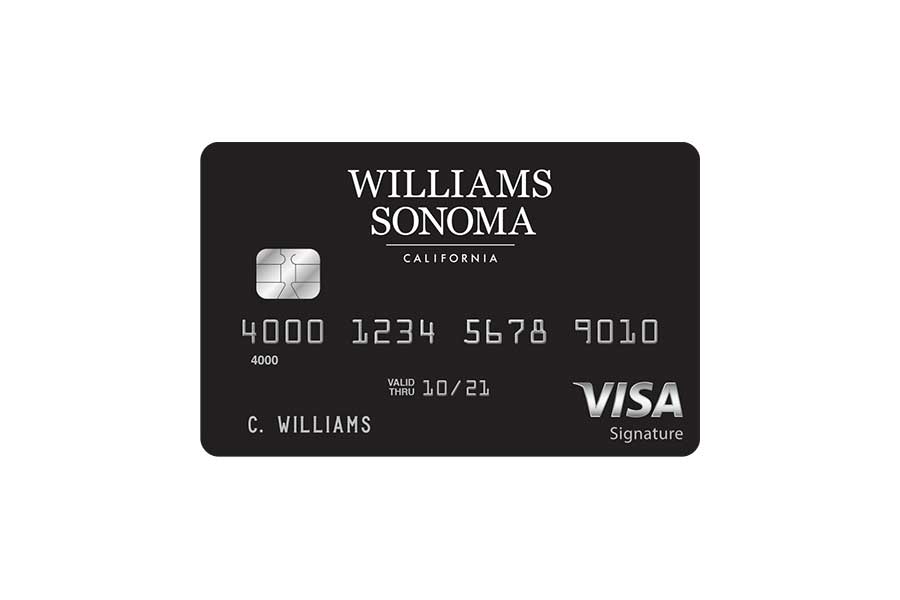
The Williams Sonoma Key Rewards Visa, issued by Capital One, is unusual among store cards because rewards earned on the card can be redeemed across all eight brands in the Williams-Sonoma, Inc. family. For customers furnishing a home, filling a wedding registry, or renovating a kitchen, that ecosystem access makes the card more useful than a typical single-brand card.
Because Capital One issues the card rather than a closed-loop retail bank, the approval process follows Capital One’s general underwriting standards rather than the looser thresholds common at specialty retail issuers. Here’s what credit score you’ll need, how Capital One evaluates the application, and one dual-tier structure that catches applicants off guard.
Recommended Credit Score for a Williams Sonoma Credit Card
Most approved applicants for the Visa version have a credit score of at least 670, placing the card in the good credit range. That threshold is higher than many store cards because the product is a full Visa that can be used anywhere Visa is accepted, not just at Williams Sonoma stores.
Applicants above 700 are in the strongest position for approval and competitive credit lines. Applicants in the fair credit range (around 630 to 669) may still be approved but are often routed to the Williams Sonoma Key Rewards Card. This is a closed-loop store-only version that carries similar rewards but can only be used at Williams-Sonoma, Inc. brands. Applying for the Visa and receiving the store card instead is common enough that it’s worth knowing the possibility exists before you apply.
Home Furnishings Spending and What It Means for Your Application
Williams Sonoma customers tend to fall into distinct spending patterns. Some are regular shoppers making $50 to $200 purchases on kitchen goods, bakeware, and gifts. Others are project shoppers furnishing a home, completing a wedding registry, or taking on a renovation, with single purchases easily running $2,000 to $10,000 between Williams Sonoma and its sister brands.
Capital One reviews your requested credit line against your income and existing debt load. Applicants planning large furnishing purchases benefit from entering the application with a clear sense of the credit line they actually need rather than requesting the maximum. A tighter, more realistic request tends to clear Capital One’s automated review more smoothly, especially at the fair credit tier.
Including all legitimate household income is worth the few extra seconds. Capital One weighs income heavily in both approval decisions and credit line sizing, particularly on a Visa with no defined credit ceiling tied to a single store purchase.
What Else Does Capital One Look At?
Capital One’s review follows a consistent set of evaluation factors:
- Capital One pre-approval signal: Capital One runs one of the most comprehensive pre-approval tools in the industry, and Williams Sonoma surfaces it directly on its credit card landing page. Running the pre-approval check uses a soft pull and returns a clear signal on your likely outcome before you submit a hard application.
- Recent credit activity: Capital One watches hard inquiries closely. More than three or four in the past six months can signal risk even with a qualifying credit score.
- Debt-to-income ratio: Capital One gives debt-to-income more weight than many specialty retail issuers. High minimum payments relative to your income limit both approval odds and credit line size.
- Payment history over the last twelve months: Recent behavior carries more weight than long-term history. A single 30-day late in the past year can complicate an otherwise qualifying application.
- Existing Capital One relationship: If you already hold a Capital One card in good standing, that history supports the application. A charged-off or defaulted Capital One account is often a harder obstacle than credit score improvement can overcome.
What Do You Get with the Williams Sonoma Key Rewards Visa?
The card earns Key Rewards that redeem across eight brands: Williams Sonoma, Williams Sonoma Home, Pottery Barn, Pottery Barn Kids, Pottery Barn Teen, West Elm, Rejuvenation, and Mark & Graham. The earn structure is:
- 10% back for the first 30 days on purchases at any of the eight brands
- 5% back at those brands after the first 30 days
- 4% back on grocery stores, dining, fast food, and food delivery
- 1% back on everything else wherever Visa is accepted
Cardholders also get a $25 birthday rewards certificate and free standard shipping at Williams Sonoma when paying with the card. There’s no annual fee.
Promotional financing is structured differently than at most store card issuers. On qualifying purchases of $750 or more, Capital One offers a 12-month equal monthly payments plan at 0% interest.
If the balance isn’t paid off after 12 months, the standard 29.24% variable APR applies to the remaining balance going forward. This isn’t deferred interest. Capital One doesn’t retroactively charge interest back to the purchase date the way Synchrony and Comenity do on their deferred interest plans, which makes this one of the safer store card financing options on the market.
The 29.24% standard APR is still high enough that carrying a non-promotional balance wipes out rewards value quickly. Treat this card as either a rewards-earning pay-in-full vehicle or a structured 0% financing tool, not a general credit line.
How to Strengthen Your Application Before Applying
These steps address the factors Capital One weighs most heavily for this card:
- Run Capital One’s pre-approval tool first: This is the single most useful preparation step for any Capital One card. Pre-approval uses a soft pull and tells you not only whether you’re likely to be approved but also whether you’ll receive the Visa or the store-only version.
- Lower your debt-to-income ratio: Paying down revolving balances ahead of applying directly improves the ratio Capital One evaluates. This has meaningful impact on both approval and credit line size.
- Space out hard inquiries: Avoid other credit applications in the 60 to 90 days before applying. Capital One treats recent inquiry activity as a meaningful risk signal.
- Apply when you can justify the credit line: If you’re planning a large furnishing purchase, applying with a specific project in mind (and an income profile that supports it) clears review more smoothly than applying speculatively.
- Resolve any existing Capital One issues first: If you have a dormant or negative Capital One account, address it before applying. Capital One’s internal visibility means old issues affect new applications.
Ready to take action on your credit?
Get your personalized plan in 30 seconds. Free, no credit check.

Bottom Line
The Williams Sonoma Key Rewards Visa is a strong choice for regular Williams Sonoma family shoppers with good credit who want ecosystem-wide rewards plus a clean 12-month financing option for larger purchases. A credit score of 670 or above puts you in solid position for the Visa itself. Fair-credit applicants can still be approved but may be routed to the closed-loop store card instead.
Run Capital One’s pre-approval tool before submitting a hard application, and pay down revolving balances to improve your debt-to-income ratio. The card’s 12-month promotional financing is genuine 0% equal payments rather than deferred interest, which makes it one of the safer store card financing options on the market. Those three moves address the most common pitfalls for this card.