Big national banks dominate the ads, but they rarely win on price. Regional banks tend to pay higher APYs on savings, charge fewer monthly fees, and approve small business loans the megabanks won’t touch. They also still have real branches, which online-only banks can’t offer.
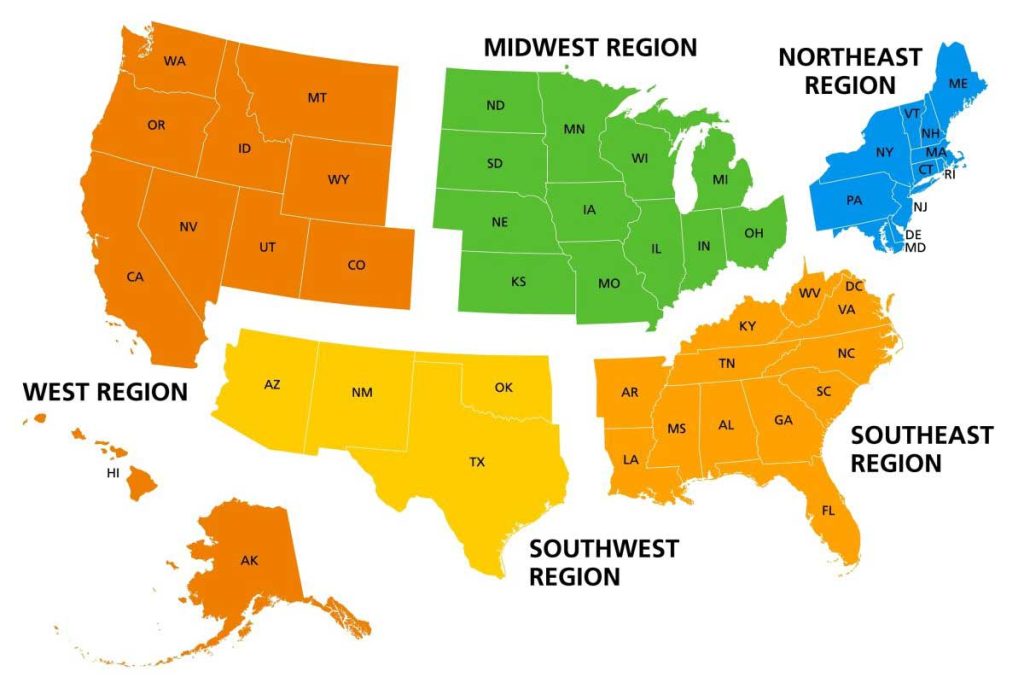
The 24 banks below cover every region of the country. Each entry tells you who the bank is best for, where it operates, and what actually sets it apart. You won’t find vague marketing copy here.
24 Best Regional Banks of 2026
We based our picks on branch footprint, monthly fees, deposit APYs, mobile app ratings, and customer service track record. Every bank on this list is stable, currently open to new customers, and not in the middle of a disruptive rebrand.
Best Regional Banks in the West
Western regional banks tend to serve customers across multiple states with strong small business lending and competitive deposit rates. The four below stand out in different ways.
Columbia Bank
Best for: Pacific Northwest businesses and homebuyers.
Columbia Bank operates across Oregon, Washington, California, Idaho, and Nevada. The bank completed its rebrand from Umpqua Bank in September 2025 and closed its $2 billion acquisition of Pacific Premier Bancorp the same year. Combined assets now sit at roughly $70 billion.
The Go-To mobile app connects customers directly with a real banker, which is rare at this size. Small business and commercial banking remain Columbia’s strongest suits. Decisions stay local rather than route through a call center in another state.
East West Bank
Best for: Cross-border business banking between the U.S. and Asia.
East West Bank serves California, Washington, New York, and several other states. The bank specializes in U.S.–Asia trade finance, which sets it apart from most regional banks its size.
Beyond the specialty lending, East West offers the standard mix of checking, savings, and loan products. Commercial lending and treasury management services are the real draw for businesses with suppliers or operations in Asia.
First Interstate Bank
Best for: Rural Mountain West customers.
First Interstate Bank operates in Montana, Wyoming, South Dakota, Oregon, Idaho, and several other states. It’s one of the few banks that still treats community banking as the main business rather than an afterthought.
The bank offers free and interest-bearing checking accounts, competitive savings rates, and flexible mortgage and small business lending. The branch network fills gaps in rural areas where Chase and Bank of America simply don’t operate.
Zions Bank
Best for: Utah and Idaho small business owners.
Zions Bank serves Utah, Idaho, and Wyoming with personal and business banking. It’s the largest bank in Utah by branch count and a consistent top SBA lender in the region.
Checking, savings, money market accounts, and CDs are all available with competitive rates. Parent company Zions Bancorporation operates under seven brands across 11 western states. Zions Bank customers get access to a much larger network than the 120 branches under the Zions name alone.
Best Regional Banks in the Southwest
Southwest regional banks tend to serve large geographic areas with a mix of energy sector lending, military town branches, and strong private banking. Here are four worth considering.
BOK Financial
Best for: Energy sector and wealth management clients.
BOK Financial is the largest bank headquartered in Oklahoma. The bank has branches in Texas, New Mexico, Colorado, Arizona, Kansas, Missouri, Nebraska, and Arkansas. Its specialty in energy industry lending reflects those Oklahoma roots.
Checking and savings accounts, money market options, CDs, and a full lending range are all available. Investment and retirement planning services are particularly well-developed. BOK makes sense if you want banking and wealth management under one roof.
First National Bank Texas
Best for: Military families and rural Texas.
First National Bank Texas operates more than 300 branches across Texas, New Mexico, and Arizona. The bank has a heavy presence in military towns like Killeen, which is home to Fort Cavazos. Its “First Convenience Bank” branches inside Walmart stores extend the reach further.
Flexible checking and savings accounts come with low opening deposit requirements. Staff at the military town branches are used to handling PCS moves, deployments, and military pay quirks. That alone sets FNBT apart from most regional banks.
Frost Bank
Best for: Customers who want real human service.
Frost Bank is a Texas institution that consistently ranks at or near the top of J.D. Power customer satisfaction surveys. The bank operates around 170 financial centers across the state with access to 1,700 plus ATMs.
Beyond checking and savings, Frost offers strong personal and business loans, investment options, and insurance. The bank has resisted the industry push to shove everyone onto apps. If you still want to talk to a human, Frost is the best pick in Texas.
MidFirst Bank
Best for: Private banking without the megabank experience.
MidFirst Bank, headquartered in Oklahoma City, is the largest privately owned bank in the United States at roughly $41 billion in assets. It operates across Arizona, California, Colorado, Nevada, Oklahoma, Texas, and Utah. The focus is private banking and commercial lending.
Multiple checking options allow fee waivers through direct deposit or minimum balance requirements. The private banking division is a genuine standout for high-net-worth customers. You get personalized service without the bureaucracy of JPMorgan or Goldman.
Best Regional Banks in the Midwest
Midwest regional banks cover large branch networks, competitive rates, and some of the best free checking accounts in the country. These four are the standouts.
Arvest Bank
Best for: Four Corners region community banking.
Arvest Bank operates in Arkansas, Kansas, Oklahoma, and Missouri. The bank is owned by the Walton family of Walmart fame, which gives it a depth of capital most community banks can’t match.
Checking, savings, money market accounts, and CDs are all available with competitive rates. The mobile app consistently ranks well in user reviews. The catch: you generally need to live in one of the four states Arvest serves to open an account online.
BMO Bank
Best for: Free checking with massive ATM access.
BMO Bank now operates in 32 states after absorbing Bank of the West. Checking and savings accounts, credit builder loans, and mortgage options are all available.
Customers get fee-free access to over 40,000 ATMs nationwide through the Allpoint network. The free checking account is one of the most accessible at this scale. BMO is a strong pick for people who want national reach with regional bank pricing.
Fifth Third Bank
Best for: Early direct deposit and Midwest customers.
Fifth Third Bank operates more than 1,150 branches across 14 states including Ohio, Florida, Illinois, Michigan, and its newest markets in California and Texas. The California and Texas expansion followed the 2025 Comerica branch conversions.
Fifth Third Momentum Checking has no monthly service fee and access to 50,000 plus fee-free ATMs. The early direct deposit feature can put your paycheck in your account up to two days early. The mobile app is among the best-rated at any regional bank.
Huntington National Bank
Best for: Overdraft forgiveness and small business.
Huntington Bank expanded significantly in 2026 after it closed its acquisition of Cadence Bank. The bank now serves 21 states with nearly 1,400 branches across the Midwest and South. It’s a top SBA lender and known for small business banking.
The 24-hour overdraft grace program is the standout retail feature. If you overdraw, you have 24 hours to make a deposit to cover the negative balance before fees apply. Free checking, strong digital tools, and solid customer service round out the package.
Best Regional Banks in the Southeast
Southeast regional banks have been in consolidation mode for years. The four below are stable, currently open to new customers, and each fills a distinct need.
First Horizon Bank
Best for: Southeast regional banking.
First Horizon operates more than 400 branches across 12 Southeastern states including Tennessee, North Carolina, Georgia, Florida, and Louisiana. The bank has a strong commercial and mortgage lending presence across the region.
Personal checking, savings, and money market accounts come with flexible qualification for fee waivers. The bank has been aggressive with CD promotional rates. First Horizon is a solid pick for customers who want Southeast-wide coverage without going to a national bank.
Hancock Whitney Bank
Best for: Gulf Coast residents.
Hancock Whitney serves Louisiana, Mississippi, Alabama, Florida, and Texas with roughly 185 financial centers concentrated along the Gulf Coast. It’s the official bank of the New Orleans Saints and LSU Athletics.
Checking and savings accounts come with competitive rates, and the bank offers personal and business lending plus wealth management. Deep regional roots mean staff actually understand the needs of Gulf Coast homeowners. That includes hurricane-related lending quirks the megabanks don’t handle well.
Renasant Bank
Best for: Small-town Southern banking.
Renasant Bank is headquartered in Tupelo, Mississippi. The bank now operates more than 280 branches across Alabama, Florida, Georgia, Louisiana, Mississippi, North Carolina, South Carolina, and Tennessee. The 2025 acquisition of The First Bancshares added more than $8 billion in assets and opened the Louisiana market.
Checking and savings accounts, credit cards, and wealth management are all available. The mortgage options are particularly wide, covering conforming, FHA, Jumbo, VA, and USDA loans. Renasant is a versatile choice for the rural and small-town Southeast.
SouthState Bank
Best for: Southeast mortgage customers.
SouthState Bank operates 371 branches across Florida, South Carolina, North Carolina, Georgia, Alabama, Virginia, Texas, and Colorado. It’s one of the largest banks headquartered in the Southeast at roughly $65 billion in assets.
Checking and savings accounts, investment products, and strong mortgage and business lending programs make this a well-rounded choice. Digital banking tools are capable without being flashy. The mortgage operation in particular is well-regarded across the Southeast.
Best Regional Banks in the Northeast
Northeast regional banks tend to compete on fees and account flexibility rather than rates. The four below cover the full range of customer needs in the region.
Fulton Bank
Best for: Mid-Atlantic everyday banking.
Fulton Bank operates more than 250 branches across Pennsylvania, Delaware, Maryland, New Jersey, and Virginia. The bank offers a full range of personal and business banking services including checking, savings, money market accounts, and CDs.
Online and mobile banking features are solid, and Fulton’s regional presence means you can walk into a branch for complicated issues. Flexible account options make Fulton a sensible default for Mid-Atlantic customers who don’t want a national bank.
M&T Bank
Best for: Northeast customers who want free checking.
M&T Bank serves customers across 13 states. The bank has a particularly strong presence in New York, Connecticut, Maryland, Pennsylvania, and New Jersey. Checking and savings accounts, credit and debit cards, retirement accounts, and investment services are all available.
The basic checking account has no monthly fee, which makes it one of the most cost-effective options among Northeast regional banks. M&T’s loan and financial planning services are respected, particularly for small business customers in the Northeast corridor.
Valley National Bank
Best for: Rewards checking customers.
Valley National Bank operates roughly 200 branches across New Jersey, New York, Florida, Illinois, Alabama, and California. Checking and savings account options include Rewards Checking and Interest Checking designed to help customers earn more on deposits.
Strong online banking features complement the branch network. The bank’s lending and mortgage products are competitive. Valley is one of the more quietly national “regional” banks, with a footprint that covers both coasts plus Florida.
Webster Bank
Best for: Second-chance banking customers.
Webster Bank serves customers across the Northeast with a network of roughly 175 branches. Most branches are concentrated in Connecticut, Massachusetts, New York, and Rhode Island. Checking, savings, money market accounts, and CDs are all available.
Webster offers five checking account options, including an Opportunity Checking account. That account is designed for customers with past banking issues who need a second chance. The commitment to accessibility makes Webster one of the more inclusive regional banks in the country.
Top Super-Regional Banks With Near-National Reach
Some banks sit in a middle tier between traditional regional banks and the big four. They operate across many states but still maintain competitive pricing. In some cases, they offer better customer service than the megabanks too.
U.S. Bank
Best for: West Coast customers who want a national footprint.
U.S. Bank is the fifth-largest bank in the United States. The bank has over 2,000 branches across 27 states, heavily concentrated in the West and Midwest. Fee-free access to the MoneyPass ATM network extends the reach further.
Checking and savings accounts, a wide range of personal and business loans, mortgages, and credit cards are all available. The mobile app consistently ranks among the best at any large bank. The Smartly Savings account has been competitive on rates.
Citizens Bank
Best for: Online savings with branch backup.
Citizens Bank operates more than 1,000 branches across 14 states in New England, the Mid-Atlantic, and the Midwest. The bank offers a full suite of services including checking and savings accounts, credit cards, and small business banking.
The Citizens Access online-only savings accounts and CDs have been among the most competitive rates in the regional bank space. They come with no monthly fees. Citizens is a solid choice for customers who want online bank rates with the option to walk into a branch.
Regions Bank
Best for: Deep South customers.
Regions Bank operates more than 1,350 branches across 15 states in the South and Midwest. Personal and business banking, loans, credit cards, and wealth management are all available.
Customers benefit from 24/7 phone support and strong digital banking tools. The mobile app handles remote check deposits and easy account management well. The bank’s broad Southern footprint makes it a default choice for customers across Alabama, Mississippi, Tennessee, Georgia, and Louisiana.
TD Bank
Best for: Early and late banking hours.
TD Bank operates along the East Coast with roughly 1,100 branches across 15 states and Washington, D.C. Checking and savings accounts, credit cards, and CDs are all available.
TD’s extended branch hours, including weekend service at many locations, remain unusual in an industry that keeps shrinking its retail footprint. Digital banking features allow for easy account access, bill payments, and mobile deposits between branch visits.
Truist
Best for: Southeast customers with broad banking needs.
Truist serves 17 states and Washington, D.C., with approximately 1,900 branches. The bank was formed from the 2019 BB&T and SunTrust merger. It provides checking and savings accounts, credit cards, money market accounts, and a full range of lending and wealth management services.
Strong online and mobile banking platforms let customers manage accounts, transfer funds, and deposit checks remotely. Truist’s business banking division is particularly well-regarded. The bank is a solid option for entrepreneurs and mid-sized companies across the Southeast.
How to Choose the Right Regional Bank
The right regional bank comes down to five practical questions. Each one is worth thinking through before you open an account.
- Location and access: Pick a bank with branches or ATMs near your home or workplace. Even if you do 95% of your banking through an app, a physical branch matters for cashier’s checks, notaries, and in-person fraud disputes.
- Fees and account costs: Watch for monthly maintenance fees, overdraft charges, and out-of-network ATM fees. Most regional banks waive monthly fees if you meet requirements like direct deposit or a minimum balance, so check the fine print.
- Interest rates: Compare APYs on savings accounts and CDs, plus rates on loans. A 4% APY versus 0.01% APY on $10,000 is a $400 per year difference. That matters more than brand loyalty.
- Digital banking quality: Mobile check deposit, Zelle, bill pay, and easy transfers should be table stakes. Check App Store ratings before you open an account.
- Customer service: Read reviews. Some banks offer 24/7 phone support, while others close their call centers at 5 p.m. on Fridays. The difference matters at 9 p.m. on a Sunday when something goes wrong.
Bottom Line
Regional banks occupy the sweet spot between the big four and online-only banks. You get competitive rates and lower fees, plus a physical branch when you need one. For most people, that combination beats either extreme.
The right pick depends on where you live, how you bank, and what you need beyond a checking account. A Gulf Coast homeowner has different needs than a Seattle tech founder or a Brooklyn freelancer. Start with the regional section that fits your location, then narrow based on whether you value free checking, mortgage expertise, small business lending, or customer service.
Whatever you pick, take five minutes to compare your current bank’s fees and APYs to your top two or three options on this list. Most people leave hundreds of dollars per year on the table by staying with a bank they opened an account with in college. You can fix that in an afternoon.
Frequently Asked Questions
What’s the difference between a regional bank and a community bank?
Regional banks are larger than community banks. They typically have branches in multiple states and tens of billions of dollars in assets. They offer business lending, investment services, and digital banking tools at a scale community banks can’t match.
Community banks focus on a single city or county. They offer more personal relationships and often more flexibility on small business and home loans. Both types tend to beat the big four on service, but regional banks balance convenience with local focus.
What are the benefits of using a regional bank?
Lower fees, higher savings rates, more flexible lending, and better customer service than the big four. Regional banks also tend to have deeper local market knowledge, which matters for mortgages and small business loans.
Online-only banks sometimes offer even lower fees and higher rates. The trade-off is that they can’t help you with a cashier’s check or a complicated fraud issue in person.
Are there any downsides to using a regional bank?
Fewer branches and ATMs outside the bank’s home region. That matters if you travel frequently or move between states. Some regional banks also offer fewer specialty products than large banks, such as favorable international wire rates or private banking for ultra-high-net-worth clients.
National banks also tend to have the most polished apps. Many regional banks have closed that gap, but not all.
Can I open an account at a regional bank if I don’t live in the region they serve?
Depends on the bank. Some require you to live in the service area. Others allow out-of-state account opening online.
Arvest Bank explicitly restricts online applications to residents of its four-state footprint. Banks like BMO and Fifth Third are more flexible. Check the bank’s online application before you assume anything.
How many regional banks are there in the U.S.?
Roughly 100 to 120, depending on how you count. The Federal Reserve generally defines a regional bank as having between $10 billion and $100 billion in assets. That number has been shrinking due to ongoing consolidation.