RH, formerly known as Restoration Hardware, sits at the upper end of the home furnishings market. Sofas, dining tables, and bedroom sets at RH regularly run into the thousands, which makes the store’s credit card a practical financing tool for customers planning significant purchases.
The RH Credit Card, issued by Comenity Bank, offers promotional financing on qualifying purchases and access to exclusive cardholder offers.
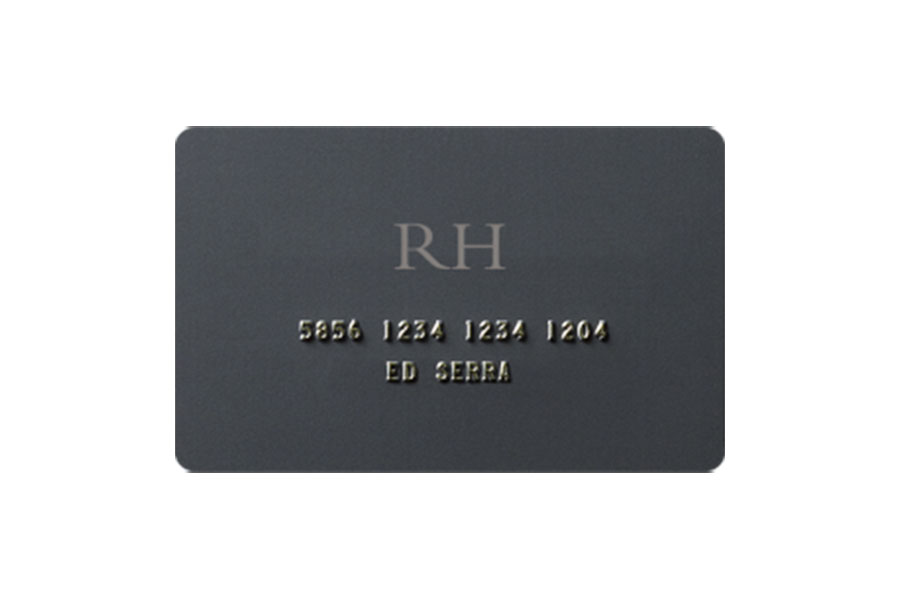
What makes the RH card interesting from a credit perspective is the same gap you see with the Neiman Marcus card: a luxury retail context paired with a fair credit approval threshold. Here’s what credit score you’ll need, what Comenity Bank evaluates, and what that combination tells you about how to approach the application.
Credit Score Requirements for the Restoration Hardware Credit Card
Most approved applicants have a credit score of at least 630, which falls in the fair credit range. That’s a notably accessible threshold for a card associated with a premium home furnishings brand, and it reflects the closed-loop nature of the product. The card works exclusively at RH locations and their website, which limits Comenity Bank’s exposure compared to a general-purpose card accepted everywhere.
Sitting at exactly 630 doesn’t put you in a strong position. Applicants with credit scores above 650 tend to move through Comenity’s review with fewer complications, and those above 670 have a noticeably cleaner path to approval. The financing amount you’re requesting at the time of application can also influence the outcome, since a $500 accessory purchase and a $8,000 sofa represent meaningfully different risk profiles to the issuer.
What Else Does Comenity Bank Look At?
Comenity Bank reviews your full financial profile alongside your credit score when evaluating RH applications. These factors carry the most weight:
- Income and employment status: RH’s customer base tends toward higher incomes, and Comenity Bank knows this. Demonstrating stable, verifiable income carries more weight here than it does with a card associated with a discount retailer. Including all legitimate sources of household income on your application strengthens your position.
- Debt-to-income ratio: Comenity prefers applicants whose existing monthly obligations leave meaningful room in their budget. A DTI ratio below 36% is generally favorable, and lower is better.
- Recent payment behavior: The past twelve months carry more weight than your overall credit history. A late payment during that window raises concerns even when the credit score technically qualifies.
- Prior Comenity history: Comenity maintains internal records across all their issued cards. A prior account in good standing supports this application, while a negative history with any Comenity product can complicate it regardless of your current credit score.
- Financing amount requested: A larger purchase at the time of application gets more scrutiny. Going in with a financing request that fits comfortably within your income and existing debt load makes the application more straightforward.
How the RH Card’s Promotional Financing Works
The RH card operates on a deferred interest model, which works differently from a true 0% APR promotion. Interest accumulates throughout the promotional period but gets waived entirely if the full balance is paid before the deadline. Any balance remaining when the promotional period closes triggers a retroactive interest charge on the full original purchase amount from the purchase date.
On an $8,000 sectional sofa, even a small remaining balance at the deadline can result in a substantial retroactive charge. The practical approach is to divide your purchase total by the number of promotional months, automate that monthly payment, and aim to clear the balance one to two months before the actual deadline as a buffer. That buffer matters because billing cycle timing can sometimes create unexpected gaps between your final payment and the promotional period closing date.
The Luxury Retail Context and What It Means for Your Application
RH’s positioning at the premium end of the home furnishings market creates an applicant profile worth thinking about carefully. Comenity Bank knows that RH customers tend to have higher household incomes than the average retail card applicant, and they factor that expectation into the review. An applicant with a 640 credit score and strong household income presents a more attractive case than one with the same credit score and modest earnings.
This makes the income section of your application as important as your credit score. Including all legitimate sources of household income, presenting stable employment history, and ensuring your debt-to-income ratio is in reasonable shape collectively matter as much as clearing the 630 credit score threshold.
How to Strengthen Your Application Before Applying
These steps address the factors Comenity Bank weighs most heavily for the RH card:
- Lead with income on your application: The luxury retail context makes income more influential here than with most fair credit store cards. Include all legitimate household income sources to present the strongest possible financial picture.
- Align your financing request with your income: A purchase amount that fits comfortably within your monthly budget relative to existing obligations makes the application more straightforward. Going in with a realistic number is more persuasive than stretching for a large purchase on a borderline profile.
- Check for prior Comenity account issues: A previous Comenity card that went negative can affect this application regardless of your current credit score. Addressing any prior Comenity history before applying gives you a cleaner starting point.
- Pay down your most utilized credit card account: That account suppresses your credit score more than any other single balance. Reducing it specifically produces a faster credit score improvement than spreading payments across multiple accounts.
- Pull all three credit reports and dispute errors: Equifax, Experian, and TransUnion each maintain independent credit reports. An inaccurate negative item on one won’t automatically appear on the others. Dispute errors directly with each bureau reporting them.
Ready to take action on your credit?
Get your personalized plan in 30 seconds. Free, no credit check.

Bottom Line
The RH Credit Card is more accessible than its luxury retail context suggests, with a fair credit threshold that puts it within reach for applicants who might not expect to qualify. A credit score around 630 or above is the starting point, but income and debt-to-income ratio carry unusual weight in this application given the premium nature of the purchases the card is designed to finance.
Go in with a realistic financing amount, a strong income picture, and a payoff plan already mapped out before you make a purchase. That combination gives you the strongest possible application and protects you from the deferred interest structure’s most common pitfall.