Tax liens haven’t appeared on credit reports from Equifax, Experian, or TransUnion since April 2018. If you find one on your credit report, you can dispute the entry and request its removal, even if you still owe the taxes.

But removing an incorrect credit report entry and resolving an actual tax lien are two different things. A tax lien can still affect your ability to get a mortgage, sell property, or borrow money.
Here’s how to dispute a tax lien on your credit report, check whether a lien is still active, and request a release or withdrawal through the IRS.
Do Tax Liens Still Appear on Your Credit Report?
No. The three major credit bureaus stopped including tax liens in consumer credit reports in April 2018. That applies to both paid and unpaid tax liens.
The change applies to Equifax, Experian, and TransUnion. Since tax liens aren’t included in their consumer credit reports, they don’t directly affect your credit score.
However, a tax lien can still exist outside your credit report. A federal tax lien is the government’s legal claim against your property when you fail to pay a tax debt. The IRS may also file a public Notice of Federal Tax Lien to alert creditors to that claim.
Lenders can review public records separately from your credit report. A mortgage lender, for example, may discover an unpaid tax lien during the loan approval process.
That’s why it’s important to distinguish between an incorrect credit report entry and an active tax lien. Removing one doesn’t automatically resolve the other.
Not sure where to start with your credit?
Answer a few simple questions and get a free step-by-step plan to rebuild your credit.

How to Remove a Tax Lien From Your Credit Report
If a tax lien appears on your Equifax, Experian, or TransUnion credit report, you can dispute it directly with the credit bureau. You don’t need to pay the underlying tax debt before challenging an entry that shouldn’t be there.
Here’s how to check your credit reports and request a correction.
Step 1: Check All Three Credit Reports
Visit AnnualCreditReport.com to request free credit reports from Equifax, Experian, and TransUnion. You can currently access each credit report for free every week.
Review the public records section of each credit report, if one exists, and look for any tax lien entries.
If you find a tax lien, record the credit bureau’s name, the entry details, and any dates associated with it. Save a copy of the affected credit report so you have a record of the error.
Step 2: Dispute the Tax Lien With the Credit Bureau
You can submit a dispute online or by mail. Explain that tax liens are no longer included in consumer credit reports from the three major credit bureaus and request removal of the entry.
Your dispute should identify the incorrect information and explain why it needs to be removed.
You can provide documents that support your request, such as an IRS lien release or withdrawal notice, if you have them. However, those documents aren’t required simply to challenge the presence of a tax lien on a major consumer credit report.
For more help with the process, follow our guide on how to dispute credit report errors.
Step 3: Follow Up on Your Credit Report Dispute
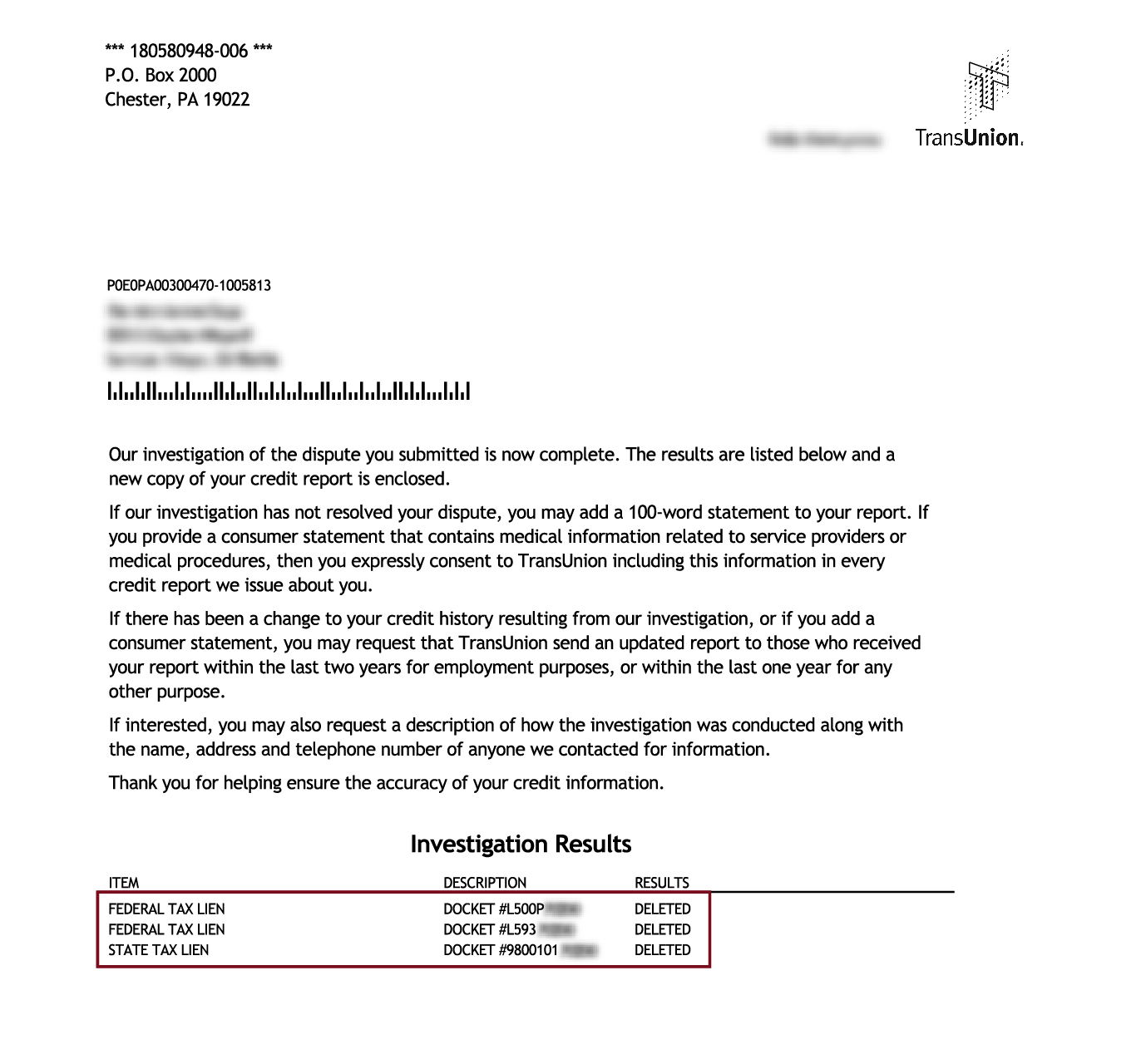
A credit bureau generally has 30 days to investigate a credit report dispute, although certain circumstances allow up to 45 days.
Once the investigation ends, the credit bureau must notify you of the results. If the entry is removed, review your updated credit report to confirm the correction.
If the credit bureau rejects your dispute and you believe the entry is still incorrect, ask for the reason. You can submit additional evidence or file a complaint with the Consumer Financial Protection Bureau.
Keep copies of your correspondence and dispute results until the issue is resolved.
How to Check Whether You Have an Active Tax Lien
A clean credit report doesn’t necessarily mean you have no outstanding tax liens. If you owe back taxes, you may need to check directly with the IRS or the government agency responsible for the debt.
Start with any tax notices you’ve received. An IRS Notice of Federal Tax Lien identifies the tax liability and provides information about the government’s claim.
You can also contact the IRS Centralized Lien Operation at 800-913-6050 to verify a federal tax lien or request information about its status.
For a public Notice of Federal Tax Lien, check the county recorder, clerk, or other local office where the notice was filed. The recording office depends on the property and jurisdiction.
State tax liens require a separate check with the relevant state tax agency or public recording office.
Federal tax liens also have collection time limits. The IRS generally has 10 years from the tax assessment date to collect a debt, but certain events can extend or suspend that period. A federal tax lien may become self-released when the applicable period ends, although the original filing may remain in public records.
How to Remove a Tax Lien From Public Records
If a legitimate federal tax lien exists, disputing your credit report won’t resolve it. You’ll need to work with the IRS to release the lien or withdraw the public Notice of Federal Tax Lien.
The IRS explains the options for resolving a federal tax lien. The two primary options have different effects.
| Lien Release | Lien Withdrawal |
|---|---|
| Ends the federal tax lien’s legal claim against your property. | Removes the legal effect of the filed Notice of Federal Tax Lien. |
| Generally occurs after the tax liability is satisfied or becomes legally unenforceable. | May be approved under specific IRS requirements, even if taxes remain unpaid. |
| The original public filing may remain accessible with a release recorded against it. | The IRS records a withdrawal, but historical records may still show the original filing. |
Neither option guarantees that every public-record database will erase the original filing. However, both can help establish the status of the lien when a lender or other party reviews your financial records.
How to Get a Federal Tax Lien Released
The most direct way to obtain a federal tax lien release is to pay the outstanding tax liability in full, along with applicable penalties and interest.
The IRS generally must release the lien within 30 days after the liability is satisfied. A release may also occur when the tax debt becomes legally unenforceable or the IRS accepts an appropriate bond.
The IRS issues a Certificate of Release of Federal Tax Lien and files it with the appropriate recording office.
If you’ve paid the tax debt and haven’t received confirmation after 30 days, contact the IRS Centralized Lien Operation at 800-913-6050.
You can request a copy of the certificate for your records. If you need proof that the release was officially recorded, contact the recording office that received it.
How to Request a Federal Tax Lien Withdrawal
A withdrawal removes the legal effect of the public Notice of Federal Tax Lien. Unlike a release, it doesn’t necessarily mean the underlying tax debt has been paid.
You can request a withdrawal through IRS Form 12277. The IRS considers withdrawal requests under several circumstances.
Common situations include:
- After a lien release: You may qualify if you’ve satisfied the tax liability, filed all required tax returns for the past three years, and met applicable tax payment requirements.
- During a direct debit installment agreement: You may qualify if you owe $25,000 or less, have made at least three consecutive direct debit payments, and meet the IRS’s other requirements. Your agreement generally must pay the debt within 60 months or before the collection period expires.
- Other qualifying circumstances: The IRS may approve a withdrawal if the notice was filed improperly or if withdrawal meets certain legal requirements related to tax collection and the interests of both parties.
Complete Form 12277, explain why you qualify, and send it to the appropriate IRS office according to the form instructions.
If the IRS approves your request, it files a withdrawal notice with the original recording office. You can also request that the IRS notify specific creditors or financial institutions.
What to Do if You Can’t Afford to Pay a Tax Lien
You don’t necessarily have to pay your entire tax debt immediately to begin resolving the problem. The IRS offers payment arrangements and financial hardship options.
However, these arrangements don’t automatically remove an existing federal tax lien. The outcome depends on your circumstances and the type of relief the IRS approves.
Set Up an IRS Payment Plan
An installment agreement lets you pay your tax debt over time.
The IRS offers two primary payment arrangements for individuals:
- Short-term payment plan: Gives eligible taxpayers up to 180 days to pay in full. There’s no setup fee, but penalties and interest continue to accrue.
- Long-term payment plan: Allows monthly payments. The current online setup fee is $29 for direct debit or $69 for other payment methods. Qualifying low-income taxpayers may receive reduced or waived fees.
You can apply through the IRS payment plan page.
An installment agreement doesn’t automatically release your federal tax lien. However, certain direct debit agreements may qualify for withdrawal of the public notice.
Apply for an Offer in Compromise
An Offer in Compromise allows qualifying taxpayers to settle federal tax debt for less than the full amount owed.
The IRS considers your income, expenses, assets, and ability to pay. Approval isn’t guaranteed, and you’ll need to provide financial information to support your application.
An accepted Offer in Compromise can help resolve the underlying tax liability once you’ve satisfied its terms. The lien generally remains in place until the requirements for release are met.
Request Currently Not Collectible Status
If you can’t afford basic living expenses and tax payments at the same time, the IRS may place your account in Currently Not Collectible status.
This temporarily delays most active collection efforts. However, it doesn’t forgive the debt, and penalties and interest may continue.
The IRS can also file a Notice of Federal Tax Lien while your account has Currently Not Collectible status.
If you’re unsure which arrangement fits your situation, review your options through the IRS payment portal or contact the IRS directly.
Can a Tax Lien Affect Mortgage Approval?
Yes. A tax lien can make mortgage approval more difficult, even though it doesn’t directly affect your credit score.
Mortgage lenders may search public records to identify claims against a property. An active federal tax lien can create problems because the IRS has a legal interest in the taxpayer’s assets.
Some borrowers can qualify for financing with an outstanding tax lien, but requirements depend on the loan program and lender.
The IRS also offers two options that may help in certain real estate transactions:
- Lien subordination: Allows another creditor to take priority over the IRS’s claim without removing the tax lien.
- Property discharge: Removes the federal tax lien from a specific property without necessarily resolving the entire tax debt.
Neither option is automatic. If you’re buying, selling, or refinancing property, discuss the lien with your lender before making commitments.
When to Get Professional Help With a Tax Lien
If you only need to remove an incorrect entry from your credit report, you can usually handle the dispute yourself for free.
An actual federal tax lien may require more help. An enrolled agent, CPA, or tax attorney can assist with IRS representation, withdrawal requests, payment arrangements, and more complex tax issues.
Professional assistance may be especially helpful if the IRS has begun enforcement action, your withdrawal request was denied, or you’re trying to complete a property transaction.
A credit repair company may help with inaccurate credit report entries, but it can’t release a legitimate federal tax lien. If you consider credit repair services, review your rights under the Credit Repair Organizations Act. You don’t need to pay a company to dispute inaccurate credit report information.
The right professional depends on the problem. For IRS debt and lien resolution, choose someone who’s qualified to represent you before the IRS.
Ready to take action on your credit?
Get your personalized plan in 30 seconds. Free, no credit check.
Frequently Asked Questions
Can a tax lien affect your spouse if only you owe taxes?
Yes, a federal tax lien may affect jointly owned property even if only one spouse owes the taxes. The IRS can generally claim the taxpayer’s interest in shared property. Community property laws may give the IRS additional collection rights. If you filed a joint tax return, both spouses are generally responsible for the tax debt.
Does a federal tax lien apply to property you buy later?
Yes. A federal tax lien generally applies to property you already own and property you acquire while the lien remains active. This can include real estate, vehicles, and other assets. Buying property after the IRS establishes a tax lien doesn’t protect it from the government’s claim.
Can you appeal a tax lien filed by the IRS?
Yes. If you receive IRS Letter 3172, you generally have 30 days from the date of the letter to request a Collection Due Process hearing. Submit IRS Form 12153 to challenge the lien filing or discuss potential collection alternatives. Your ability to dispute the underlying tax debt during the hearing depends on your circumstances.
Can tax liens appear on specialty consumer reports?
Yes, some specialty consumer reporting companies may include tax liens from public records. These companies aren’t subject to the same voluntary tax lien exclusion policies followed by Equifax, Experian, and TransUnion. If a lender identifies a tax lien through a specialty consumer report, ask which company supplied the information and request a copy to check for errors.