
Mavis Tire is one of the larger regional tire and auto service chains in the Northeast, with locations across New York, New Jersey, Connecticut, Pennsylvania, and several other states.
The Mavis Tire Credit Card gives customers a way to finance tire purchases, brake jobs, oil changes, and other auto services without paying the full cost upfront. For car owners who face unexpected repair bills, having a financing option at the point of service can make a meaningful difference.
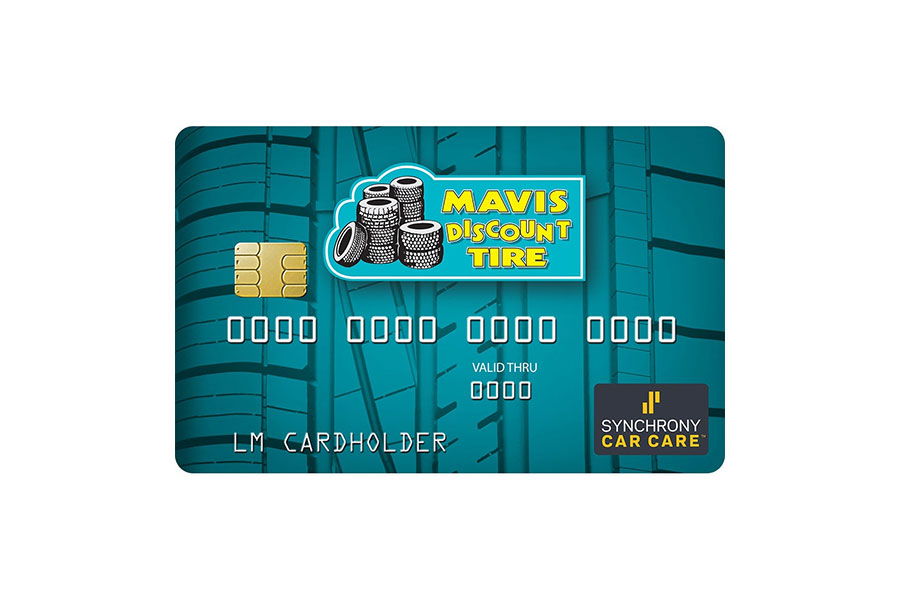
The card is issued by Synchrony Bank, which means the approval process follows Synchrony’s standard underwriting approach rather than anything unique to Mavis. Here’s what credit score you’ll need, what else Synchrony evaluates, and how to prepare before you apply.
Credit Score Requirements for a Mavis Tire Credit Card
Most approved applicants have a credit score of 640 or higher, placing the card in the fair credit range. That threshold is consistent with most Synchrony-issued auto and retail financing cards, which tend to be more accessible than general-purpose bank cards at similar credit tiers.
A 640 credit score puts you in contention without securing approval on its own. Applicants with credit scores closer to 660 tend to move through Synchrony’s review with fewer complications, and those above 670 are in a noticeably stronger position. The rest of your financial profile fills in what your credit score leaves open.
What Else Does Synchrony Bank Look At?
Synchrony Bank’s review process for the Mavis Tire Credit Card weighs these factors alongside your credit score:
- Income relative to existing debt: Synchrony looks at how much room your current monthly obligations leave for a new credit line. An applicant whose budget is already stretched close to its limits presents a harder case regardless of credit score.
- Recent payment behavior: The past twelve months carry more weight than your overall credit history. A single late payment during that window can complicate an otherwise qualifying application at this credit tier.
- Prior Synchrony history: Synchrony maintains internal records across all their issued cards. A prior Synchrony account in good standing works in your favor here, while a negative history with any Synchrony product can affect this application regardless of your current credit score.
- Credit utilization: High balances relative to your available credit limits signal financial strain. Getting total usage below 30% before applying strengthens both your credit score and your overall profile.
- Active derogatory marks: An open collection account or recent charge-off raises concerns that a 640 credit score alone won’t resolve. Addressing those before applying removes a significant obstacle.
How the Mavis Tire Card Financing Works
The card’s primary feature is its promotional financing on qualifying auto service purchases. These offers let you spread payments over a set period without interest, provided you clear the full balance before the promotional deadline. The deferred interest structure means any remaining balance when the period ends triggers a retroactive interest charge on the original purchase amount, not just what’s left.
For an unexpected repair bill, that financing window can be genuinely useful. A $600 brake job spread over six months with no interest is a meaningful relief for a tight month. The key is treating the payoff deadline as a hard stop rather than an approximate target. Divide the purchase total by the number of promotional months, set up an automatic payment for that amount, and the card works exactly as intended.
How the Mavis Tire Card Compares to Other Auto Financing Options
Before applying for the Mavis Tire Credit Card, it’s worth knowing that several competing auto service cards offer similar promotional financing at a range of retailers. The Synchrony Car Care card, for example, is accepted at a much broader network of auto service providers rather than a single chain. If you use multiple repair shops or want financing flexibility beyond Mavis locations, a broader-network auto financing card may serve you better than a single-retailer product.
For customers who primarily use Mavis for their vehicle maintenance and want a card that earns them something back on those purchases, the Mavis card makes sense. For customers who want financing flexibility across multiple shops, comparing options before applying is the smarter move.
How to Improve Your Odds Before Applying
These steps address the factors Synchrony Bank weighs most heavily in the months before you apply:
- Check for prior Synchrony account issues: A previous Synchrony card that went negative can affect this application regardless of your current credit score. Resolving any prior Synchrony history gives you a cleaner starting point with this issuer.
- Pay down your most utilized credit card account: That account suppresses your credit score more than any other single balance. Targeting it specifically produces a faster improvement than spreading payments evenly across multiple accounts.
- Resolve active collection accounts: An open collection is one of the most common denial reasons at this credit tier. Settling it before applying removes that obstacle from Synchrony’s review.
- Build a recent streak of on-time payments: Six consecutive months of clean payments across all accounts sends a clear signal to Synchrony’s automated review process about your current financial habits.
- Pull all three credit reports and dispute errors: Equifax, Experian, and TransUnion each maintain independent credit reports. An inaccurate negative item on one won’t automatically appear on the others. Dispute errors directly with each bureau reporting them.
Ready to take action on your credit?
Get your personalized plan in 30 seconds. Free, no credit check.

Bottom Line
The Mavis Tire Credit Card is a practical financing tool for regular Mavis customers with fair credit who want a way to manage unexpected auto service bills without paying everything upfront. A credit score around 640 or above, paired with a clean recent payment history and no unresolved Synchrony account issues, puts you in a reasonable position for approval.
If you’re weighing this card against other auto financing options, consider whether a single-retailer card fits your repair shop habits better than a broader-network alternative. For dedicated Mavis customers, the card does what it’s designed to do. Just go in with a payoff plan for any promotional financing you use, and the deferred interest structure works in your favor rather than against you.