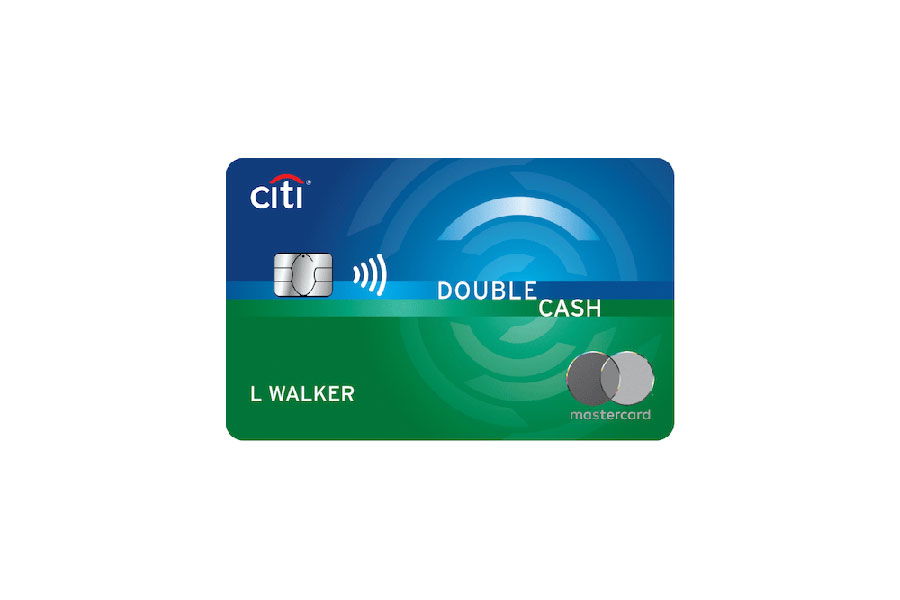
The Citi Double Cash Card earns 2% cash back on every purchase with a twist: 1% when you make the purchase and another 1% when you pay it off. It has no annual fee and no rotating categories to track.
The other headline feature is a 0% intro APR for 18 months on balance transfers, which makes this one of the best balance transfer cards on the market. If you’re carrying high-interest debt, Double Cash can save you real money while earning rewards on your regular spending.
Here’s what credit score you need to get approved, how Citi evaluates applications, and a few details about this card that most applicants miss.
Recommended Credit Score for the Citi Double Cash Card
Citi recommends good to excellent credit for this card, which translates to a FICO score of 670 or higher. Most approved applicants land around 700, and scores above 720 typically move through underwriting smoothly with higher credit lines.
Scores below 670 face slim approval odds. Applying without meeting the threshold triggers a hard inquiry that can lower your score for nothing, so it’s worth checking your position first. Citi offers a pre-qualification tool that uses a soft credit pull and shows your likely outcome without affecting your score.
How Citi Evaluates Applications
Citi’s underwriting weighs several factors beyond your credit score. These carry the most weight in the decision:
- Payment history: Your record of on-time payments over the past 24 months matters more than your long-term history. A single 30-day late can complicate an application that would otherwise qualify.
- Credit utilization: High balances on existing cards suggest limited capacity for more credit. Getting usage below 30% before applying strengthens both your score and your application.
- Recent credit applications: Multiple hard inquiries in the past six months signal risk. Space out applications when possible.
- Income relative to requested credit: Citi uses income heavily in credit line sizing. Report all legitimate household income including self-employment and regular side income.
- Existing Citi relationship: If you already hold a Citi card in good standing, that history supports a new application. A previously closed Citi account with unpaid balances can block approval.
What You Get with the Citi Double Cash Card
The card earns a flat 2% cash back on all purchases, split into two parts. You get 1% when you make the purchase and another 1% when you pay off the charge. To earn the second 1%, you need to make at least the minimum payment on time.
That detail catches some cardholders off guard. If you skip a minimum payment or pay late, you forfeit the second 1% on that statement’s purchases. For most cardholders who pay on time this isn’t an issue, but it’s worth knowing before you apply.
Rewards are paid as Citi ThankYou Points, which can be redeemed for cash back at a 1:1 rate (20,000 points equals $200). If you also hold a premium Citi card like the Strata Premier or Premier, those points become transferable to airline and hotel partners, which can boost their value well beyond 2%.
The card also includes these features:
- Welcome offer: $200 cash back after spending $1,500 in purchases in the first 6 months. Delivered as 20,000 ThankYou Points.
- Balance transfer intro APR: 0% for 18 months on balance transfers made in the first 4 months. After the intro period, the variable APR runs 17.49% to 27.49%.
- Balance transfer fee: 3% for transfers made in the first 4 months, then 5% after (minimum $5).
- Cell phone protection: Up to $600 against damage or theft when you pay your monthly phone bill with the card, subject to a $25 deductible.
- No annual fee: The card costs nothing to keep long-term.
What This Card Is Not Good For
The Double Cash doesn’t offer a 0% intro APR on new purchases, only on balance transfers. If you want to finance a large purchase interest-free, look at cards like the Blue Cash Everyday or Wells Fargo Active Cash instead.
The 3% foreign transaction fee also makes this a poor choice for international travel. Pair it with a no-foreign-fee card if you travel abroad regularly.
If your goal is maximizing cash back in specific categories like groceries or gas, a category-specific card earns more. The Double Cash works best as a base card for purchases that don’t fit bonus categories on other cards you hold.
How to Strengthen Your Application Before Applying
These steps address what Citi actually weighs in its underwriting:
- Use Citi’s pre-qualification tool: The soft pull tells you your likely outcome before you commit to a hard inquiry. This is the single most useful preparation step.
- Pay down revolving balances: Lower utilization strengthens both your credit score and the credit line Citi will approve.
- Space out hard inquiries: Avoid other credit applications in the 60 to 90 days before applying. Recent inquiry activity is a meaningful risk signal.
- Report full household income: Include all legitimate income sources. Higher reported income translates to better terms and higher credit lines.
- Check your prior Citi history: A previously closed Citi account with unpaid balances can block approval. Address any Citi issues before applying.
Ready to take action on your credit?
Get your personalized plan in 30 seconds. Free, no credit check.
Bottom Line
The Citi Double Cash Card is a solid choice for applicants with good credit who want simple, uncapped rewards and a long balance transfer offer. The flat 2% rate is among the best available for a no-annual-fee card. The 18-month 0% intro APR on balance transfers makes it one of the top debt consolidation options on the market.
A credit score of 670 or above, paired with steady income and a clean recent payment record, puts you in reasonable position for approval. Scores of 700 or higher improve both your odds and your terms.
Use Citi’s pre-qualification tool to check your likely outcome before submitting a hard application, and pay down existing credit card balances to strengthen your profile. Understand that the second 1% cash back requires making minimum payments on time. Those three moves address the most common pitfalls for this card.