Getting started with investing feels harder than it should be. Between confusing jargon, high account minimums, and no shortage of apps promising to make you rich, most people just… don’t start. That’s exactly the problem Stash was built to solve.
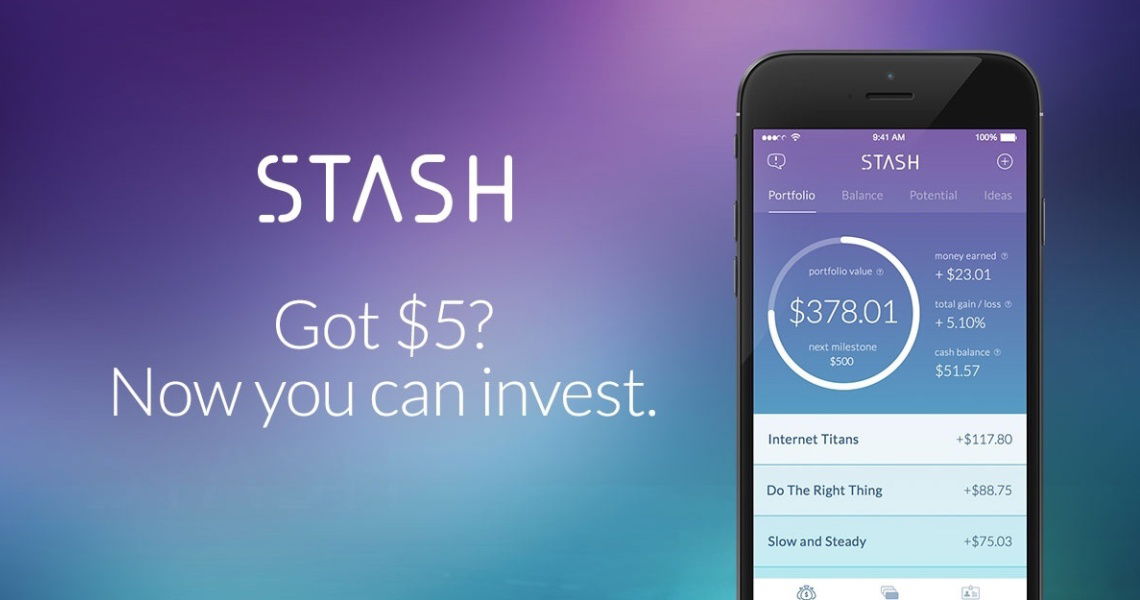
Stash is a beginner-focused investing app that strips away the complexity and lets you start building a portfolio with as little as $5. It’s not trying to compete with Fidelity or Charles Schwab. Its goal is simpler: get more people investing who otherwise wouldn’t be.
In this review, we’ll walk through how Stash works, what it costs, what’s changed, and whether it’s worth it for someone just getting started.
What Is Stash?
Stash is a personal finance app launched in 2015 that combines investing, banking, and financial education in one place. It’s built for people who want to invest but don’t have a lot of money to start or a lot of experience to draw from.
The core idea is simple: buy fractional shares of stocks and exchange-traded funds (ETFs), automate your contributions, and build up a portfolio over time without needing to become a stock market expert. You can open an account with no minimum deposit, and you only need $5 to start investing.
One thing worth knowing upfront: in February 2026, Southeast Asian tech company Grab announced an agreement to acquire Stash at an enterprise value of $425 million. The deal is expected to close in Q3 2026, and Stash will continue operating as an independent brand in the U.S. with no changes to its current plans, services, or leadership.
Key Features of the Stash App
Stash covers more ground than a typical investing app. Here’s what’s included across all plans:
- Fractional shares: Buy pieces of stocks instead of full shares, starting at just $0.01.
- Automated investing: Set up recurring deposits on a weekly, biweekly, or monthly schedule.
- Smart Portfolios: A hands-off, managed portfolio option that automatically rebalances when any allocation drifts more than 5%.
- Stock-Back rewards: Use the Stash debit card and earn stock as a reward on everyday purchases.
- Educational content: A built-in “Learn” section with short lessons on investing basics.
- AI Money Coach: An AI-powered financial companion that offers personalized guidance, investment suggestions, and retirement planning help.
- All-in-one dashboard: View your investments, checking account, and retirement savings in one place.
How Stash Makes Investing Approachable
Stash doesn’t assume you know anything about the stock market, and that’s by design. When you sign up, the app asks about your goals and risk tolerance and recommends a portfolio style based on your answers. From there, you can choose to invest manually or hand things off to a Smart Portfolio that does the work for you.
Investment options are grouped into themes like “Clean Energy” or “American Innovators,” so you can invest in areas that interest you without needing to know individual ticker symbols. Everything is explained in plain language, and the app surfaces tips and guidance as you go.
The AI Money Coach, launched in late 2024, takes this further. It functions as an in-app financial guide that can suggest investment strategies, help you think through retirement goals, and answer questions based on your actual account data. It’s a meaningful upgrade from a static FAQ page.
Stash Pricing Plans
Stash offers a single subscription plan with a flat monthly fee and no trading commissions.
The Stash Plan costs $12 per month, or $108 per year if you pay annually, which saves 25%. It includes a personal brokerage account, Traditional and Roth IRAs, custodial accounts for kids, Smart Portfolio access, Stock-Back rewards, a 3% retirement match, a $10,000 life insurance policy, and 24/7 financial guidance.
The flat fee structure is straightforward, but it matters more when your balance is small. If you contribute $30 a month and pay $12 for the plan, a big chunk of your money goes to fees before it touches the market. As your balance grows, the fee becomes less of a factor.
It’s also worth knowing about a few fees that aren’t part of the subscription. Stash charges a 0.25% annual advisory fee on Smart Portfolios with balances of $1,000 or more and on Managed Retirement Accounts. There’s also a 1% fee on instant transfers and a $75 ACAT fee if you move your assets to another brokerage.
What You Can Invest in with Stash
Stash gives you access to thousands of individual stocks and ETFs. Fractional shares make it possible to invest in high-priced names like Apple or Amazon without spending hundreds of dollars on a single share.
You can choose your own investments or let Smart Portfolios handle allocation for you. The app offers over 40 themed investment groupings, such as “Blue Chips” or “Women Who Lead,” for people who want a values-based or interest-driven approach. Investment types available include:
- Individual stocks: U.S.-listed companies across various sectors.
- ETFs: Diversified funds covering stocks, bonds, and specific market segments.
- IRAs: Traditional and Roth retirement accounts available on both plans.
- Custodial accounts: Investment accounts for children.
Stash doesn’t support cryptocurrency trading, options, or advanced order types. It’s built for long-term, buy-and-hold investing rather than active trading.
Is Stash Safe to Use?
Stash is a registered investment advisor with the U.S. Securities and Exchange Commission. Your investments are held by Apex Clearing Corporation, a FINRA and SIPC member, which means your securities are protected up to $500,000 in the event of a brokerage failure. That protection covers brokerage failure, not market losses.
The app uses 256-bit encryption to protect your data and requires either a PIN or biometric authentication at login. When you sign up, you’ll need to provide your Social Security number and banking information. This is standard practice for any regulated investment platform and is required by federal law.
Stash for Retirement
The Stash Plan includes access to Traditional and Roth IRA accounts. A Traditional IRA lets you contribute pre-tax dollars, which can lower your taxable income now. A Roth IRA is funded with after-tax money, but qualified withdrawals in retirement are tax-free.
Stash includes a 3% match on IRA contributions, worth up to $225 per year. That’s a notable perk for anyone serious about building retirement savings. The app also includes a retirement calculator and AI Money Coach guidance tied specifically to retirement planning.
For 2026, the IRS contribution limit for IRAs is $7,500 for those under 50 and $8,600 for those 50 and older.
Stash Custodial Accounts for Kids
Stash subscribers can open custodial investment accounts for their children. The account is managed by the parent or guardian until the child reaches majority, which is typically 18 or 21 depending on the state.
There are no contribution limits, and the funds can be used for anything once the child takes control. It’s a straightforward way to get a head start on building wealth for the next generation without needing a complex trust or financial advisor.
Pros & Cons of Stash
Stash does a lot of things well for beginners, but it’s not the right fit for everyone. Here’s a quick look at where it stands out and where it falls short.
Pros
- Low barrier to entry: Start investing with as little as $5.
- Beginner-friendly design: Clean interface, plain-language explanations, and themed portfolios make it easy to get started.
- Smart Portfolios: Automated, self-rebalancing portfolios for a hands-off experience.
- AI Money Coach: Personalized financial guidance built directly into the app.
- Retirement and custodial accounts: Supports long-term wealth building across multiple account types.
- Stock-Back rewards: Earn stock on everyday card purchases.
Cons
- Flat fees hit small balances hard: A $12/month fee is a significant cost if you’re just starting with a small amount.
- Transfer fees: A $75 ACAT fee applies if you move assets to another brokerage, and instant transfers carry a 1% fee.
- No cryptocurrency or advanced trading: Stash is built for long-term investors, not active traders.
- Smart Portfolios only cover brokerage accounts: IRAs and custodial accounts require you to pick your own investments.
Who Should Use Stash?
Stash works best for people who are new to investing and want a guided, low-pressure experience. If the idea of researching individual stocks feels like too much, Stash gives you enough structure to get started without being overwhelming.
It’s also a good fit if you want everything in one app. Banking, investing, retirement savings, and now AI-powered financial coaching are all in the same place. That convenience is worth something for people who don’t want to manage accounts across multiple platforms.
Experienced investors who want tax-loss harvesting, advanced order types, or lower per-dollar fees will likely find Stash limiting. For that crowd, platforms like Fidelity or Schwab offer more flexibility at no monthly cost.
Bottom Line
Stash is a solid starting point for anyone who wants to get into investing without a steep learning curve. The app is well-designed, the features are genuinely useful for beginners, and additions like Smart Portfolios and AI Money Coach have made it more capable than earlier versions.
The flat monthly fee is the main thing to keep in mind. At $12/month, the cost is manageable once your balance has grown, but it can feel steep when you’re starting out with small contributions. If you commit to regular deposits and actually use the app’s features, the value improves over time.
If you’re ready to stop putting off investing and just want something that makes it easy to start, Stash is worth a look.