Value City Furniture is a regional furniture chain operating primarily in the Midwest and Mid-Atlantic, with a customer base that skews toward value-conscious buyers furnishing complete rooms rather than picking up individual accent pieces.
The Value City Furniture Credit Card, issued by Comenity Capital Bank, gives customers a financing option for those purchases through promotional offers that make larger transactions more manageable month to month.
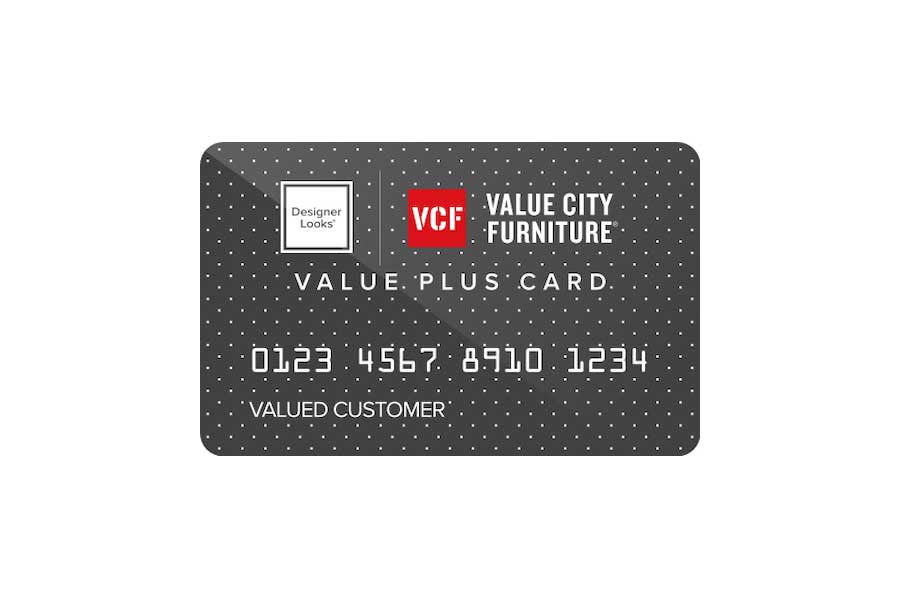
The card occupies familiar territory in the furniture financing space, but a few characteristics set Value City’s application apart from what you’d encounter at Ashley, Rooms To Go, or Arhaus. Here’s what credit score you’ll need, what Comenity Capital Bank evaluates, and how to approach the application.
What Credit Score Does the Value City Furniture Credit Card Require?
Most approved applicants have a credit score of at least 630, placing the card in the fair credit range. That threshold is consistent with Comenity Capital Bank’s positioning across most of their furniture and home goods financing cards.
Value City’s price point is relevant context here. The store positions itself as an accessible alternative to higher-end furniture retailers, which means a typical transaction might run $500 to $2,000 rather than the $3,000 to $8,000 range you’d see at a premium brand. That lower average financing amount reduces Comenity Capital Bank’s exposure per transaction, which is part of why the approval threshold sits where it does.
Applicants with credit scores above 650 tend to move through the review with fewer complications. Those above 670 are in the strongest position within the fair credit tier. If your credit score lands right at 630, income and recent payment behavior carry increasing weight in the final decision.
What Else Does Comenity Capital Bank Look At?
Two factors deserve particular attention for the Value City application specifically, beyond the standard Comenity review criteria.
The purchase amount relative to income matters more here than it does with cards where purchases tend to cluster at lower price points. A customer financing a $1,800 living room set is making a more substantial commitment than someone buying a $300 end table, and Comenity Capital Bank adjusts its scrutiny accordingly. Going in with a financing request that fits comfortably within your monthly budget is more persuasive than reaching for a larger purchase on a borderline profile.
Prior Comenity Capital Bank history is the other factor that distinguishes this application from one at a different issuer. Comenity Capital Bank maintains internal records across all their retail card products. A prior account in good standing with any Comenity Capital Bank product works in your favor. A negative prior account can complicate this application regardless of how much your credit score has improved since then.
Beyond those two: recent payment behavior over the past twelve months, credit utilization below 30% across all accounts, and the absence of active derogatory marks all factor into the automated decision in the ways consistent with other Comenity Capital Bank products.
How the Value City Financing Works
The Value City card operates on a deferred interest model. Interest accumulates throughout the promotional period but gets waived entirely if the full balance is cleared before the deadline. Any remaining balance when the period closes triggers a retroactive interest charge on the full original purchase amount from the purchase date.
Value City’s promotional periods vary by purchase amount and current promotions, so confirming the specific terms at the time of purchase is worth a few seconds before you commit. Dividing your purchase total by the number of promotional months, automating that payment, and building in a one-month buffer before the actual deadline is the standard approach that protects you from an unexpected retroactive charge.
How Value City Compares to Competing Furniture Financing Cards
Value City operates in a competitive space with Ashley, Bob’s Discount Furniture, Rooms To Go, and other regional chains that offer similar store financing through Synchrony or Comenity products. The approval thresholds across that group are largely similar, ranging from 620 to 640 for most fair credit applicants.
Where Value City differentiates is the regional footprint. If you’re in the Midwest or Mid-Atlantic and Value City is your primary furniture destination, the store card makes practical sense. If you shop across multiple furniture retailers, comparing the financing terms at each before applying is worth the effort, since the deferred interest structure and promotional periods can vary meaningfully between programs.
How to Strengthen Your Application Before Applying
These steps address the factors Comenity Capital Bank weighs most heavily for the Value City card:
- Check your prior Comenity Capital Bank history: A previous negative account with any Comenity Capital Bank product can affect this application. Resolving any prior issues with this issuer before applying gives you the cleanest possible starting point.
- Align your financing request with your budget: Go in with a purchase amount whose monthly payment fits within your income after existing obligations. A realistic request is more persuasive than reaching for a larger transaction on a borderline profile.
- Pay down your most utilized credit card account: That account suppresses your credit score more than any other single balance. Targeting it specifically produces a faster improvement than spreading payments across multiple accounts.
- Build a recent payment streak: Six consecutive months of on-time payments across all accounts presents a compelling picture to Comenity Capital Bank’s automated review regardless of what came before.
- Pull all three credit reports and dispute errors: Equifax, Experian, and TransUnion each maintain independent credit reports. An inaccurate negative item on one won’t automatically appear on the others. Dispute errors directly with each bureau reporting them.
Ready to take action on your credit?
Get your personalized plan in 30 seconds. Free, no credit check.

Bottom Line
The Value City Furniture Credit Card is a practical financing tool for shoppers at this regional chain who want to spread payments on furniture purchases without paying an annual fee. A credit score around 630 or above, paired with a purchase amount that fits your budget and a clean recent payment record, puts you in a reasonable position with Comenity Capital Bank.
Check your prior Comenity Capital Bank history before applying and go in with a payoff plan already calculated. Those two steps eliminate the most common avoidable denial and payoff pitfall for this card.